
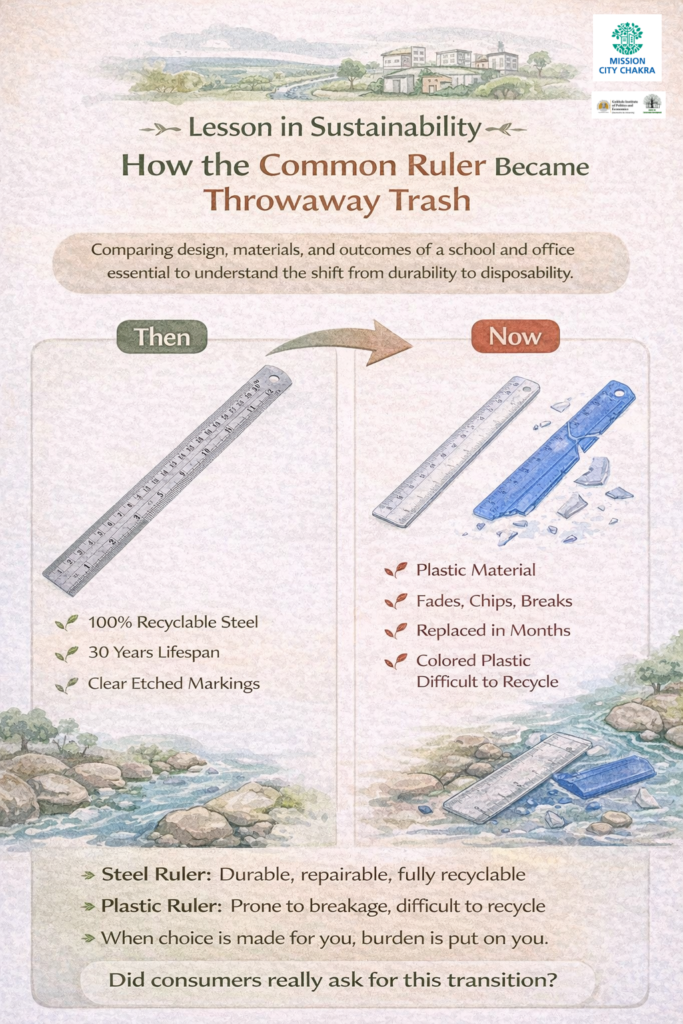
How Design Decisions Turned a Durable Object into River Waste
A reflection by Aditi Deodhar on how the everyday ruler shifted from durable steel to fragile plastic, removing consumer choice, increasing waste, and quietly contributing to river pollution.
Introduction: A Tool Meant to Measure—Now Measuring Waste
A ruler is one of the most basic tools we use.
Children use it.
Adults use it.
Architects, tailors, engineers, and students rely on it.
It is not a disposable object by nature.
And yet, today, broken plastic rulers are a common sight in drains and rivers.
Two Rulers, Two Design Philosophies
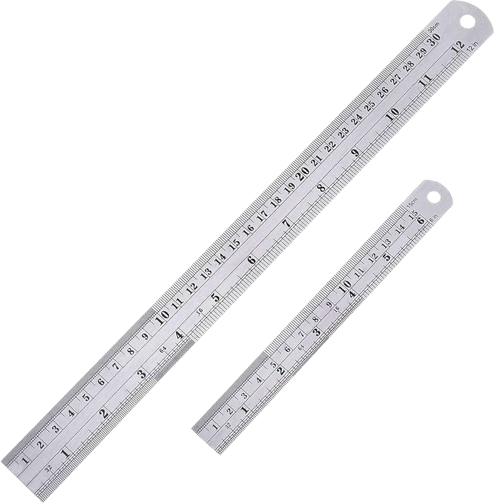
Many of us still have:
a steel ruler bought decades ago,
markings intact,
edges straight,
function unchanged.
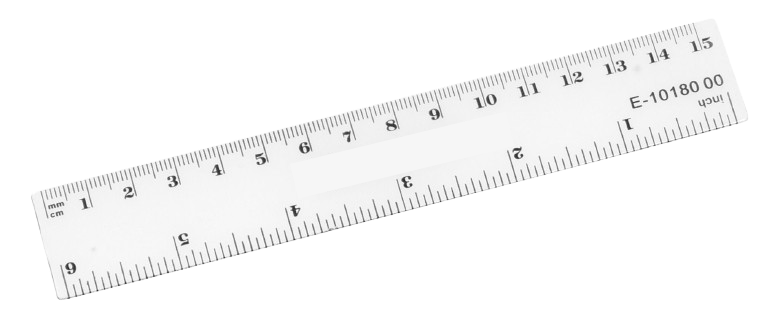
At the same time, plastic rulers:
chip,
bend,
fade,
break—often within months.
Once the edge is damaged or markings fade, the ruler stops being a ruler.
Was Durability the Problem?
Let’s ask the obvious questions:
Did anyone complain that steel rulers lasted too long?
Were users demanding rulers that break faster?
Was weight a serious issue for school bags?
There is no evidence that users asked for fragility.
The shift happened because plastic:
is cheaper upfront,
allows colour branding,
supports visual differentiation,
feels “modern.”
Coloured Plastic: An Unasked-For Complication
Even within plastic rulers:
clear plastic is more recyclable,
coloured plastic is harder to recycle,
pigments contaminate recycling streams.
So we must ask:
Who demanded coloured rulers?
Not users.
Not functionality.
Not durability.
This was a design and marketing decision.
When Choice Is Removed, Blame Is Misplaced
Today, parents buying rulers often find:
plastic is the default,
steel is rare or absent,
durability is no longer a visible choice.
When the ruler breaks:
the parent replaces it,
the child learns disposability,
the waste system absorbs another failure.
And when the waste escapes management,
it reaches the river.
The Pattern Is Familiar Now
Rulers.
Rounders.
Sharpeners.
Pens.
Each story repeats:
durability replaced by disposability,
simplicity replaced by complexity,
responsibility shifted downstream.
Conclusion: Consumers Didn’t Fail—Design Did
This is not about careless users.
It is about how:
Design quietly decides what kind of behaviour is even possible.
When long-lasting tools are replaced by short-lived ones,
consumers are left managing consequences they did not choose.