Product Design & Materials

Exploring how material selection, durability, and product design determine plastic pollution, health exposure, and long-term sustainability.

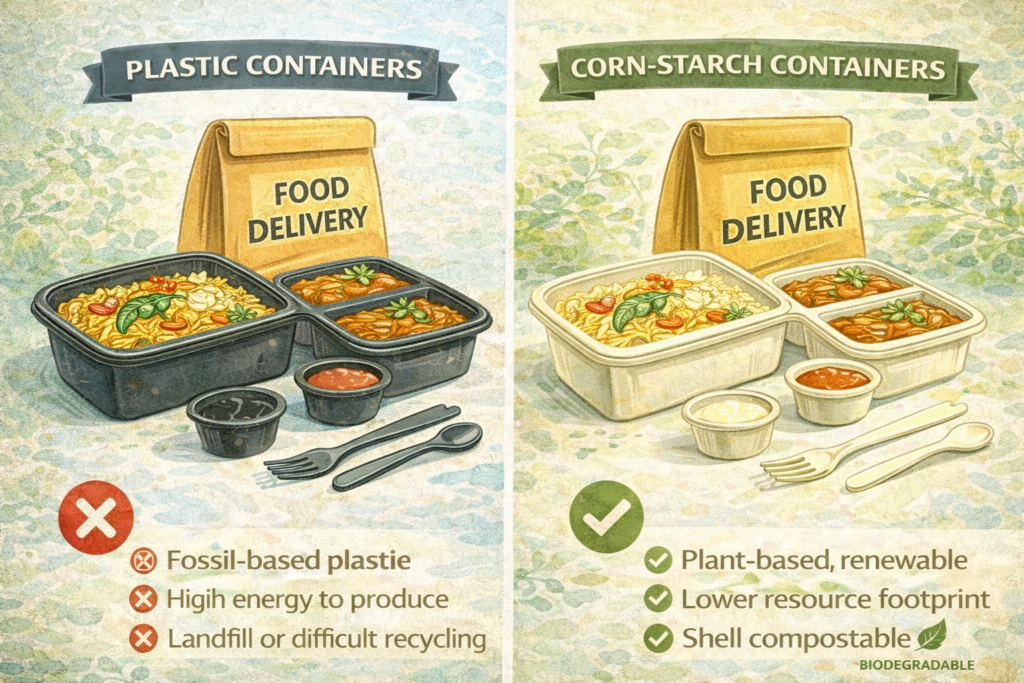
The Rise of Biodegradable Crockery: Replacing Black Plastic Delivery Containers, One Meal at a Time

The problem with black plastic delivery containers Businesses are replacing black plastic food containers with biodegradable crockery made from bagasse, areca leaf, corn-starch and other plant-based materials. Learn how these eco-friendly containers work, their benefits and limitations, and why restaurants are rapidly switching to them. They are everywhere. Open any food delivery bag and you’ll […]
The Rise of Biodegradable Crockery: Replacing Black Plastic Delivery Containers, One Meal at a Time Read More »

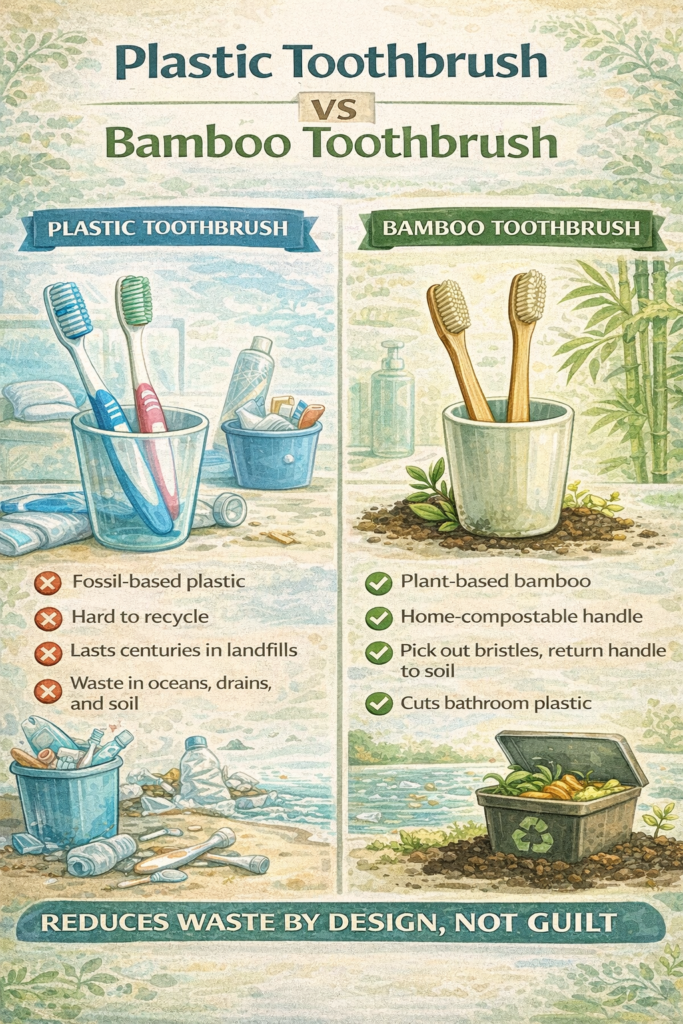
Bamboo Toothbrush: A Small Design Change That Cuts Plastic Waste Daily

A bamboo toothbrush replaces plastic handles with fast-growing bamboo, cutting bathroom plastic waste by design. Learn how bamboo toothbrushes work, their pros and cons, how to dispose of them, and which manufacturers supply them in and around Pune. Why talk about toothbrushes at all? Toothbrushes are tiny, but they add up. Conventional brushes are: made

Bamboo Toothbrush: A Small Design Change That Cuts Plastic Waste Daily Read More »

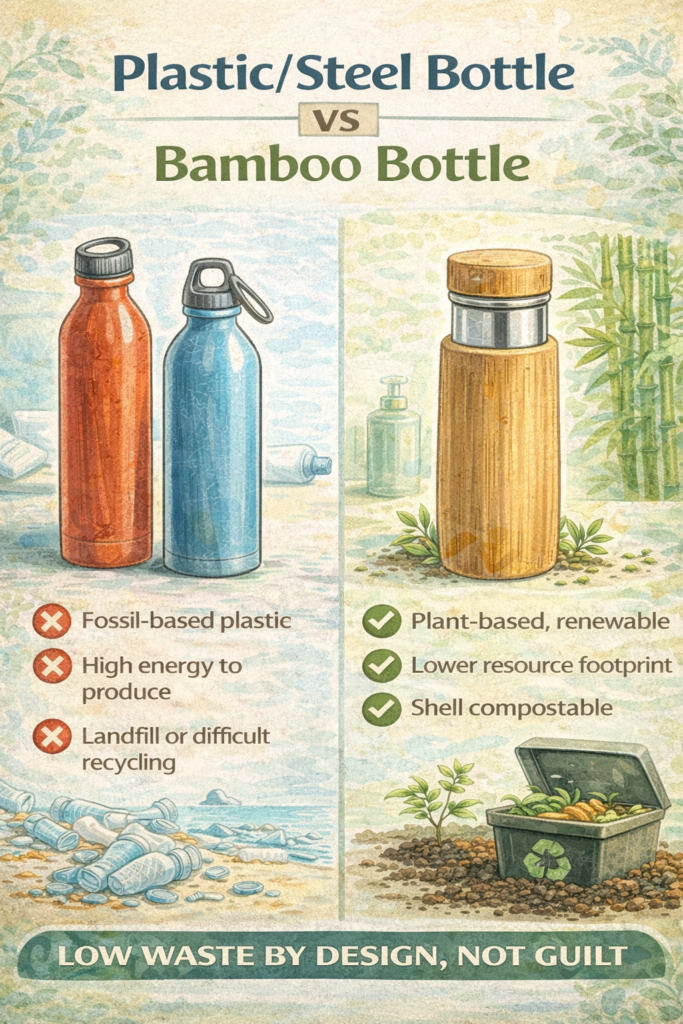
Bamboo Water Bottle: A Renewable Alternative Redesigning the Way We Drink Water

Bamboo water bottles replace plastic and metal bottles with a renewable bamboo exterior. Learn how bamboo bottles are made, their environmental benefits, pros and cons, care tips, and why they are an impactful “reduce-waste-by-design” product. Why bamboo water bottles matter We carry a bottle every day—to school, office, gym, travel. That small object represents: plastic

Bamboo Water Bottle: A Renewable Alternative Redesigning the Way We Drink Water Read More »

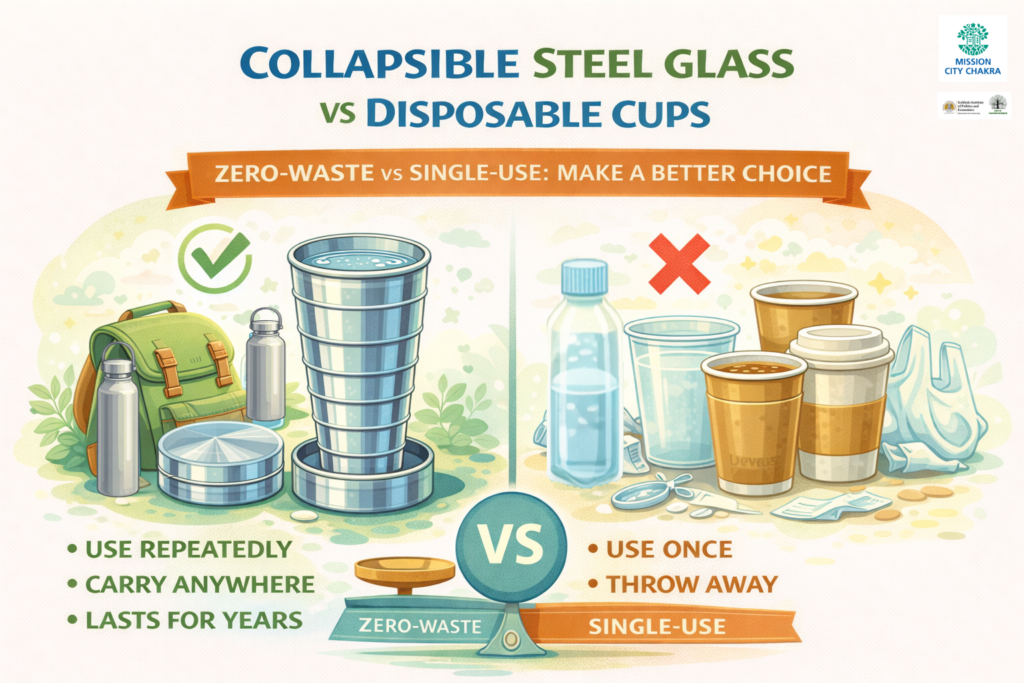
Collapsible Steel Glass: A Simple Design Solving a Big Waste Problem

A collapsible steel glass is a reusable, portable alternative to disposable paper and plastic cups. Learn how this smart design reduces single-use waste, encourages refilling, and supports zero-waste travel and everyday habits. The Problem: Single-Use Cups Everywhere From train stations and offices to events and trekking trails, we constantly come across disposable cups: paper cups

Collapsible Steel Glass: A Simple Design Solving a Big Waste Problem Read More »

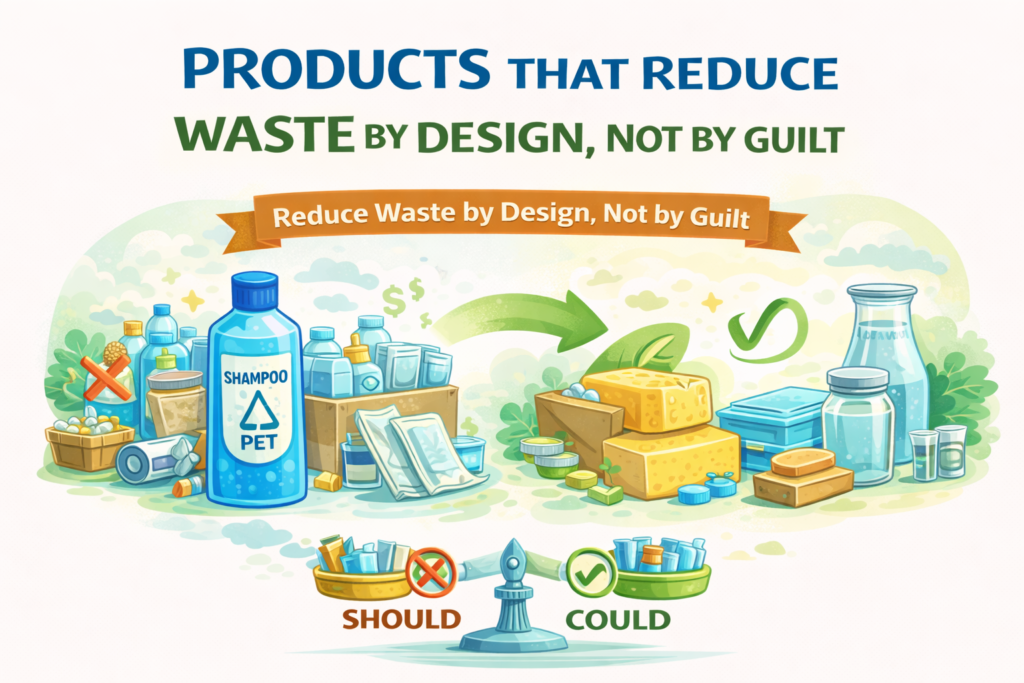
Products That Reduce Waste by Design, Not by Guilt

Discover how innovative entrepreneurs are creating products that reduce waste by design instead of blaming consumers. This series explores smart design, waterless products, refill systems, and packaging innovations that prevent waste before it is created. Introduction: We don’t need more guilt. We need better design Most conversations around waste sound the same: carry your own

Products That Reduce Waste by Design, Not by Guilt Read More »

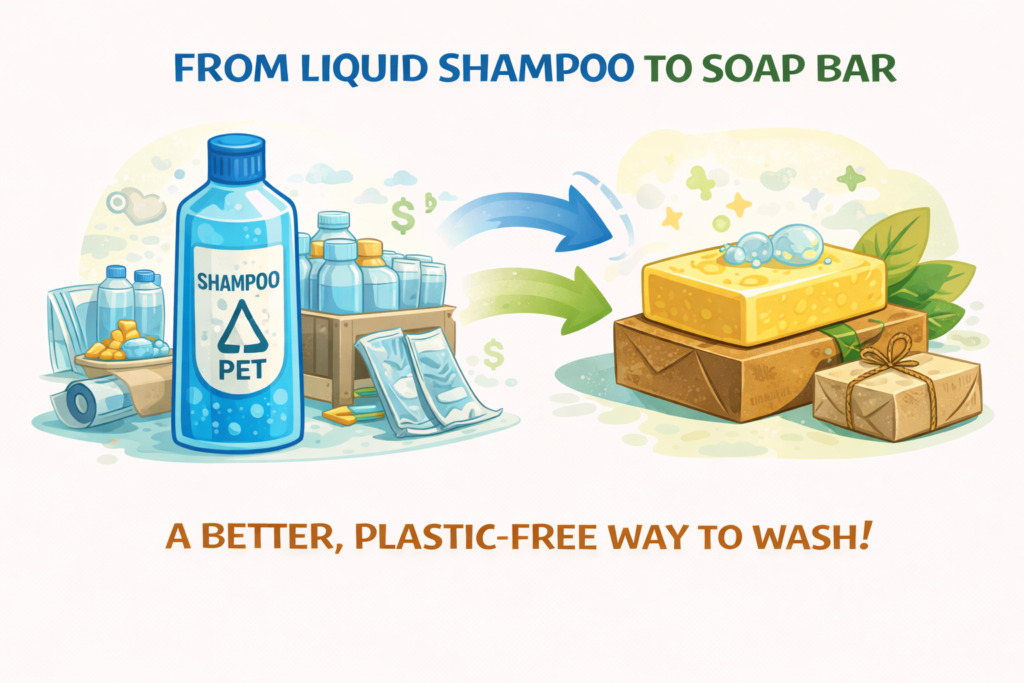
Shampoo Bars: How Solid Shampoo is Reducing Plastic Waste, Transport Emissions, and Chemical Load

Shampoo bars are replacing liquid shampoo in plastic bottles. Learn how solid shampoo cuts packaging waste, eliminates PET bottles, reduces transport emissions, and saves resources by removing water from the product. A small change in form, a big change in impact Most of us grew up thinking shampoo must be liquid in a plastic bottle.

Shampoo Bars: How Solid Shampoo is Reducing Plastic Waste, Transport Emissions, and Chemical Load Read More »

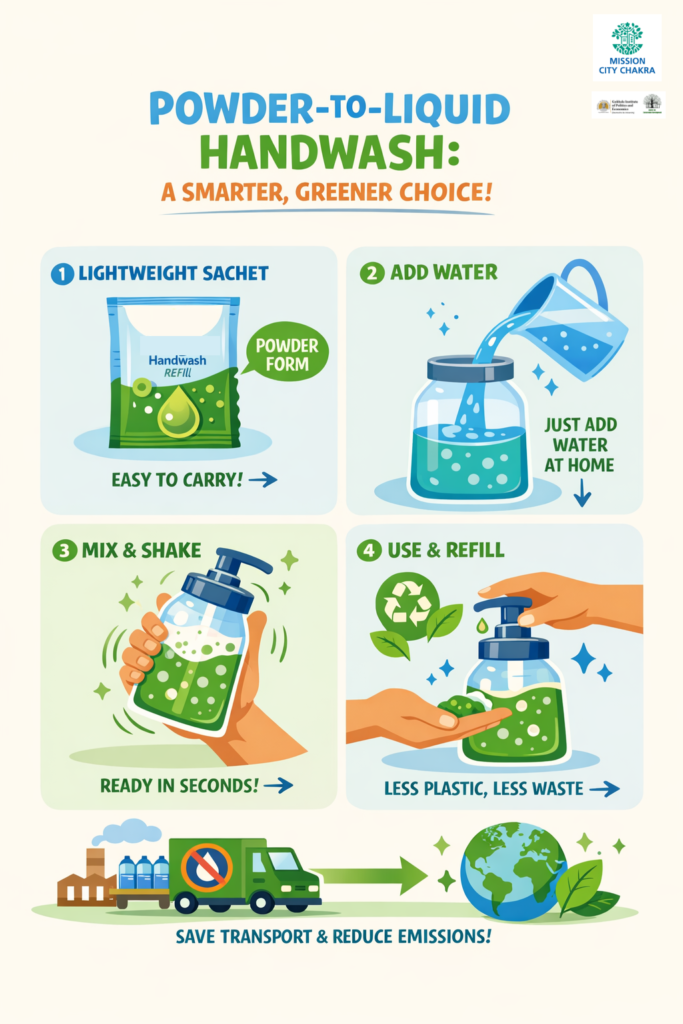
How One Clever Product Rethinks Handwash — Cutting Waste, Transport Impact & Preservatives

In a world where every drop of resource matters, many everyday products still carry hidden inefficiencies. Take your typical liquid hand wash: it’s mostly water. That means most of the weight and volume transported from factories to stores to your home is just… water — with all the associated energy, packaging, and emissions. What if

How One Clever Product Rethinks Handwash — Cutting Waste, Transport Impact & Preservatives Read More »

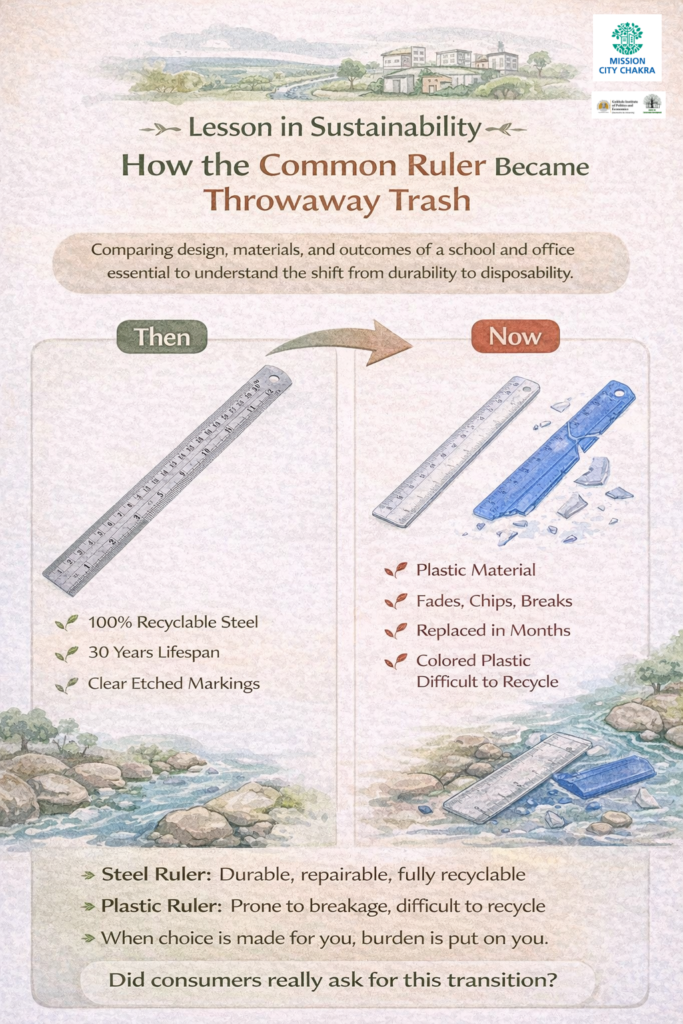
The Ruler: A Simple Tool That Forgot How to Last

How Design Decisions Turned a Durable Object into River Waste A reflection by Aditi Deodhar on how the everyday ruler shifted from durable steel to fragile plastic, removing consumer choice, increasing waste, and quietly contributing to river pollution. Introduction: A Tool Meant to Measure—Now Measuring Waste A ruler is one of the most basic tools

The Ruler: A Simple Tool That Forgot How to Last Read More »

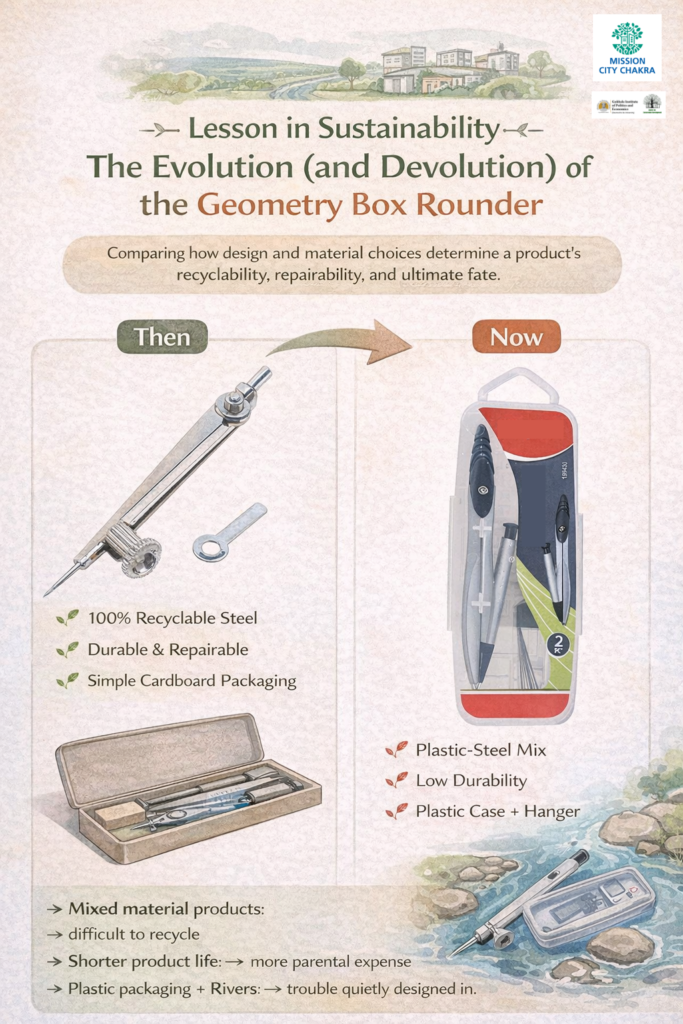
What a Geometry Box Rounder Teaches Us About Sustainable Design

A reflection by Aditi Deodhar on how design and material choices determine sustainability, using the everyday geometry box rounder to show how mixed materials, unnecessary packaging, and design decisions quietly create waste that ends up in rivers. Introduction: Sustainability Is Hidden in Ordinary Objects When we think about unsustainable products, we often imagine large, industrial

What a Geometry Box Rounder Teaches Us About Sustainable Design Read More »

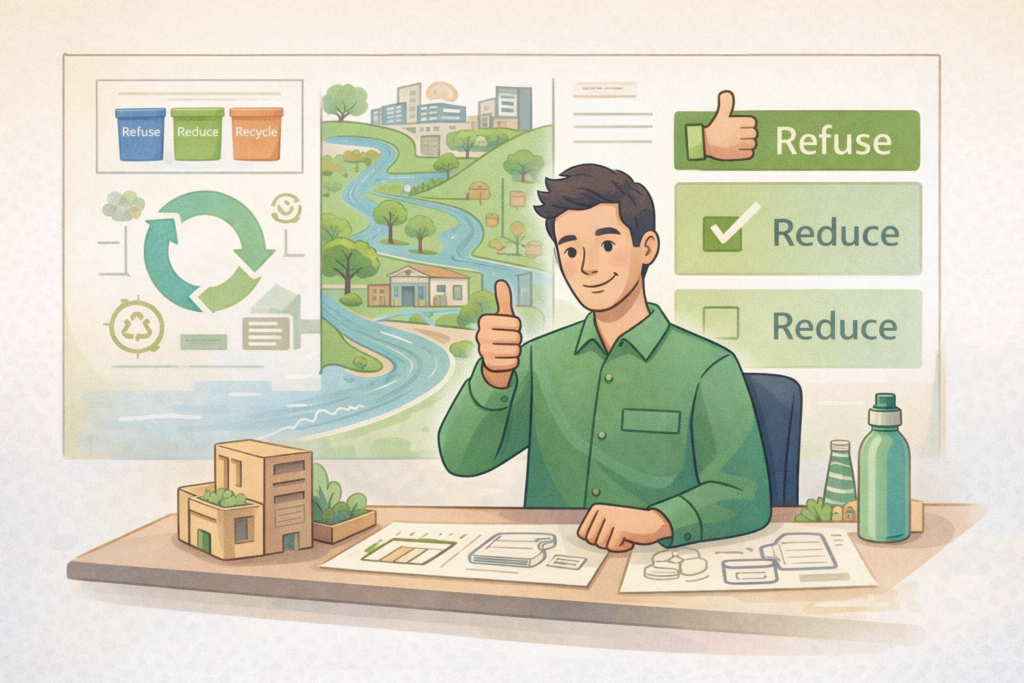
Designing the End at the Beginning

Why a Product’s Afterlife Is Decided at the Design Table A reflective, collaborative blog for product designers on how end-of-life outcomes are decided during the design phase—and why refusing unnecessary elements, avoiding mixed materials, and adopting supportive sustainability frameworks is the need of the hour. Introduction: Designers Shape Futures—Often Invisibly Every product tells two stories.

Designing the End at the Beginning Read More »