upstream waste prevention

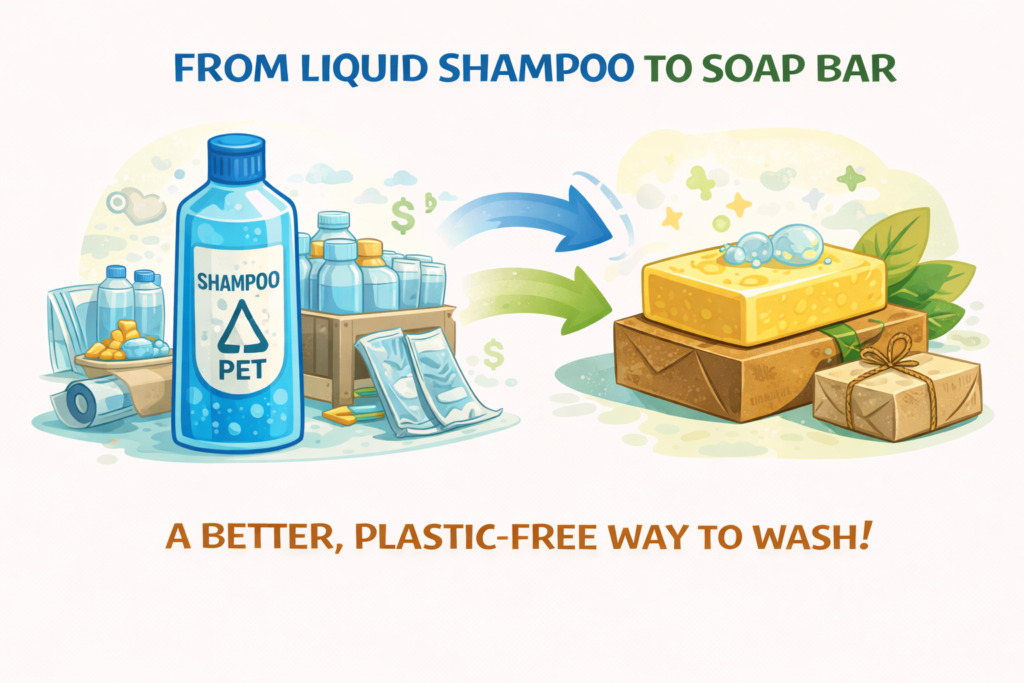
Shampoo Bars: How Solid Shampoo is Reducing Plastic Waste, Transport Emissions, and Chemical Load

Shampoo bars are replacing liquid shampoo in plastic bottles. Learn how solid shampoo cuts packaging waste, eliminates PET bottles, reduces transport emissions, and saves resources by removing water from the product. A small change in form, a big change in impact Most of us grew up thinking shampoo must be liquid in a plastic bottle. […]
Shampoo Bars: How Solid Shampoo is Reducing Plastic Waste, Transport Emissions, and Chemical Load Read More »

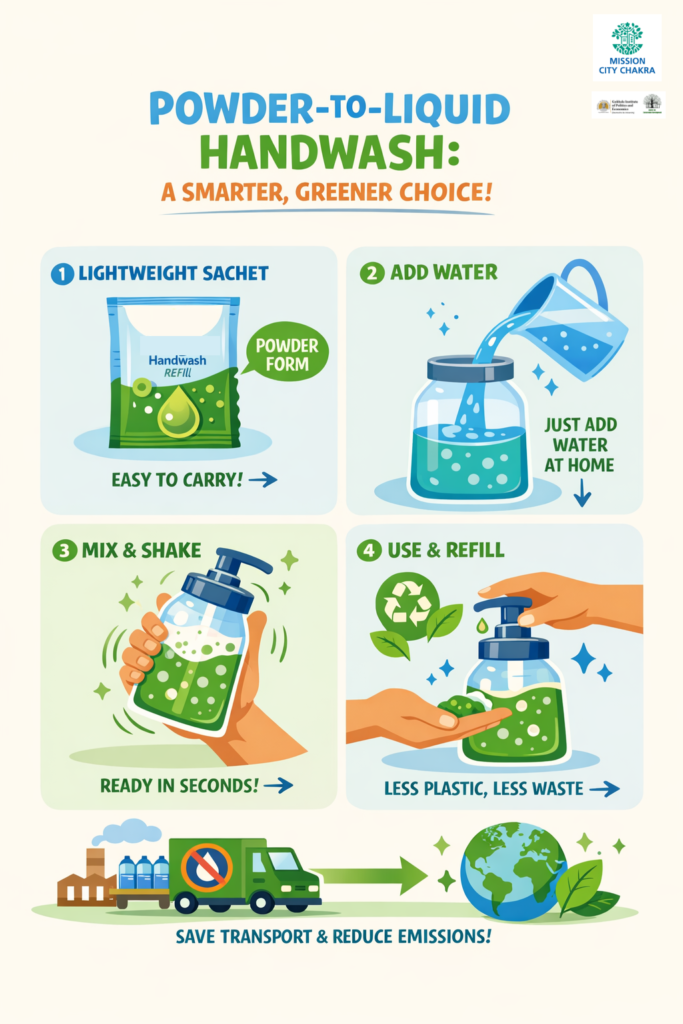
How One Clever Product Rethinks Handwash — Cutting Waste, Transport Impact & Preservatives

In a world where every drop of resource matters, many everyday products still carry hidden inefficiencies. Take your typical liquid hand wash: it’s mostly water. That means most of the weight and volume transported from factories to stores to your home is just… water — with all the associated energy, packaging, and emissions. What if

How One Clever Product Rethinks Handwash — Cutting Waste, Transport Impact & Preservatives Read More »

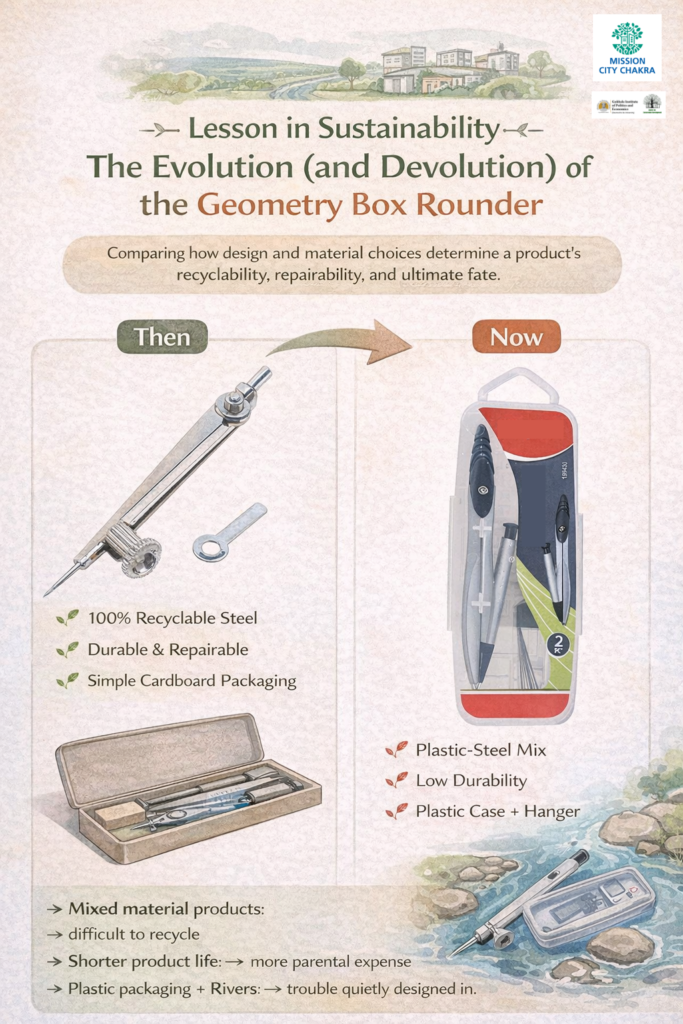
What a Geometry Box Rounder Teaches Us About Sustainable Design

A reflection by Aditi Deodhar on how design and material choices determine sustainability, using the everyday geometry box rounder to show how mixed materials, unnecessary packaging, and design decisions quietly create waste that ends up in rivers. Introduction: Sustainability Is Hidden in Ordinary Objects When we think about unsustainable products, we often imagine large, industrial

What a Geometry Box Rounder Teaches Us About Sustainable Design Read More »

Designing the End at the Beginning

Why a Product’s Afterlife Is Decided at the Design Table A reflective, collaborative blog for product designers on how end-of-life outcomes are decided during the design phase—and why refusing unnecessary elements, avoiding mixed materials, and adopting supportive sustainability frameworks is the need of the hour. Introduction: Designers Shape Futures—Often Invisibly Every product tells two stories.

Designing the End at the Beginning Read More »

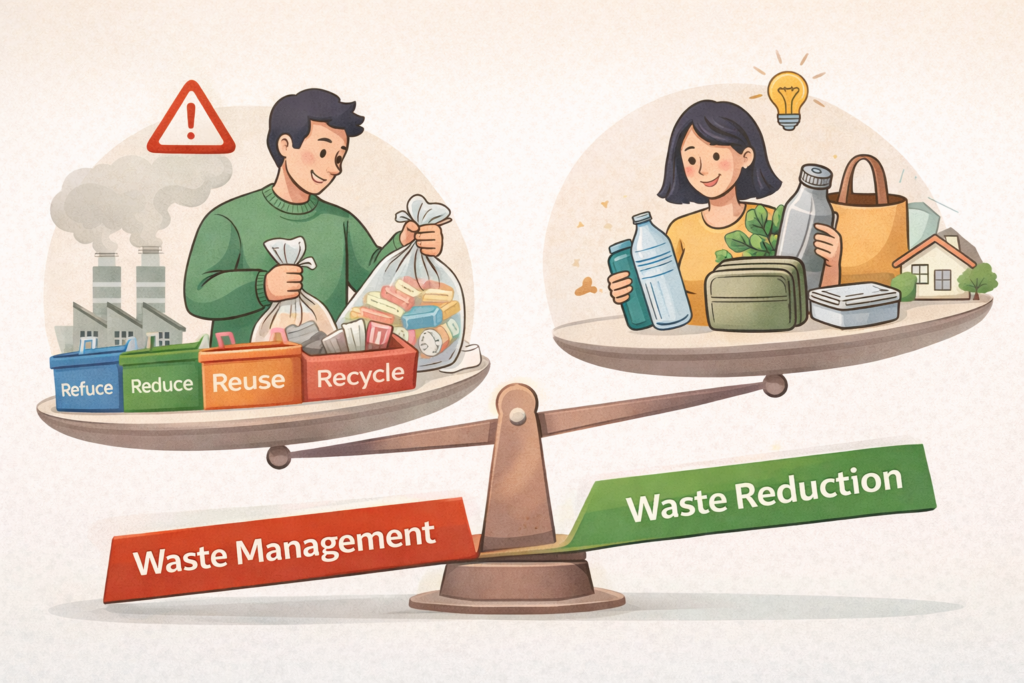
The Core Shift: From Waste Management to Waste Reduction

A simple decision-making guide that helps households choose safer, sustainable products using a Product Audit Matrix based on utility, health impact, material choice, and recyclability. Introduction: Why “Recyclable” Is the Wrong First Question Most people try to be responsible consumers.They ask questions like: Is this recyclable? Is this eco-friendly? Where do I throw this? But

The Core Shift: From Waste Management to Waste Reduction Read More »

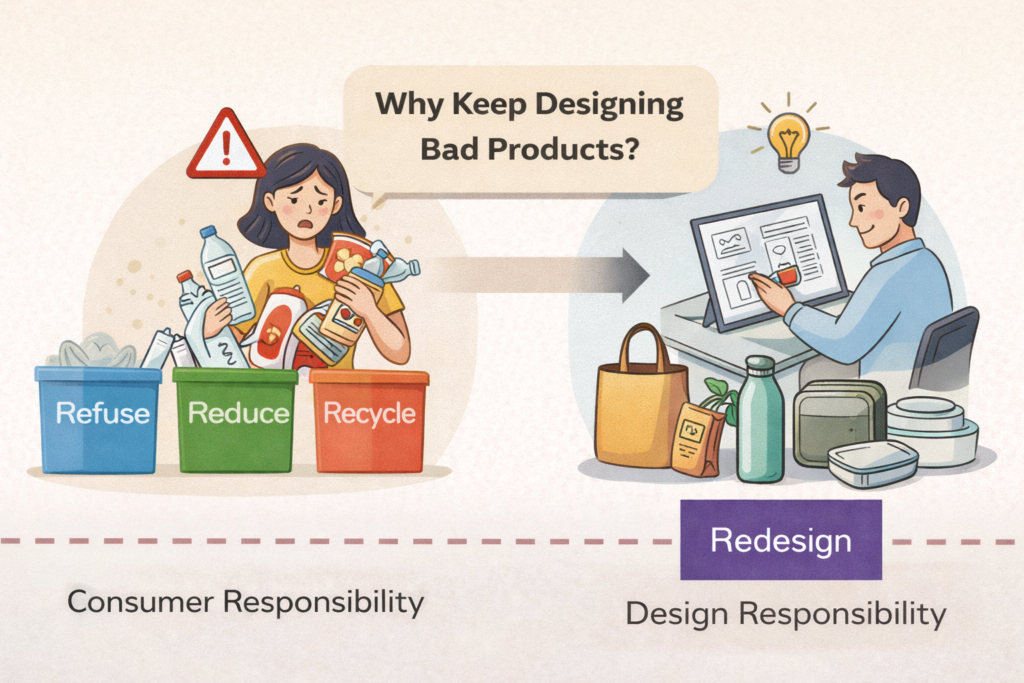
Why the “R Framework” Must Move Upstream

From Consumer Responsibility to Design Responsibility The R Framework is often framed as a consumer responsibility. In this blog, Aditi Deodhar explains why real waste prevention must begin at the design stage—before products reach consumers—and why redesign is the most powerful intervention Introduction: Why Are Consumers Asked to Fix a Design Problem? Every sustainability conversation

Why the “R Framework” Must Move Upstream Read More »

Why Eliminating Plastic Tiffins Is a Policy-Level Change — Not a Lifestyle Choice

Plastic tiffins are not a personal lifestyle issue. They are a public health, waste prevention, and governance challenge. Here’s why eliminating them requires policy-level action. Reframing the Conversation: This Is Not About Personal Preference Plastic tiffins are often discussed as a choice: “People should choose better.”“Families can switch if they want to.”“It’s a lifestyle decision.”

Why Eliminating Plastic Tiffins Is a Policy-Level Change — Not a Lifestyle Choice Read More »