
Every sustainability journey begins with someone who sees not just a problem, but an opportunity.
For Mrs. Kirti Pandit, Principal of Huzurpaga English Medium School, Mangdewadi, Katraj, that opportunity came in the form of a simple question:
What if the flowers offered during worship could nourish a school garden instead of polluting a river?
Turning a Challenge into an Opportunity
Unlike many school campuses, the Katraj campus has very few large trees.
This meant that the school did not generate enough dry leaves to establish a traditional composting project.
Instead of abandoning the idea, the school looked for another source of biodegradable material that was readily available in the community.
The answer was Nirmalya—flowers, leaves and other offerings from homes and temples.
Rather than allowing these offerings to be discarded in plastic bags or thrown into rivers, the school decided to transform them into compost for its own garden.
A School Garden Becomes a Circular System
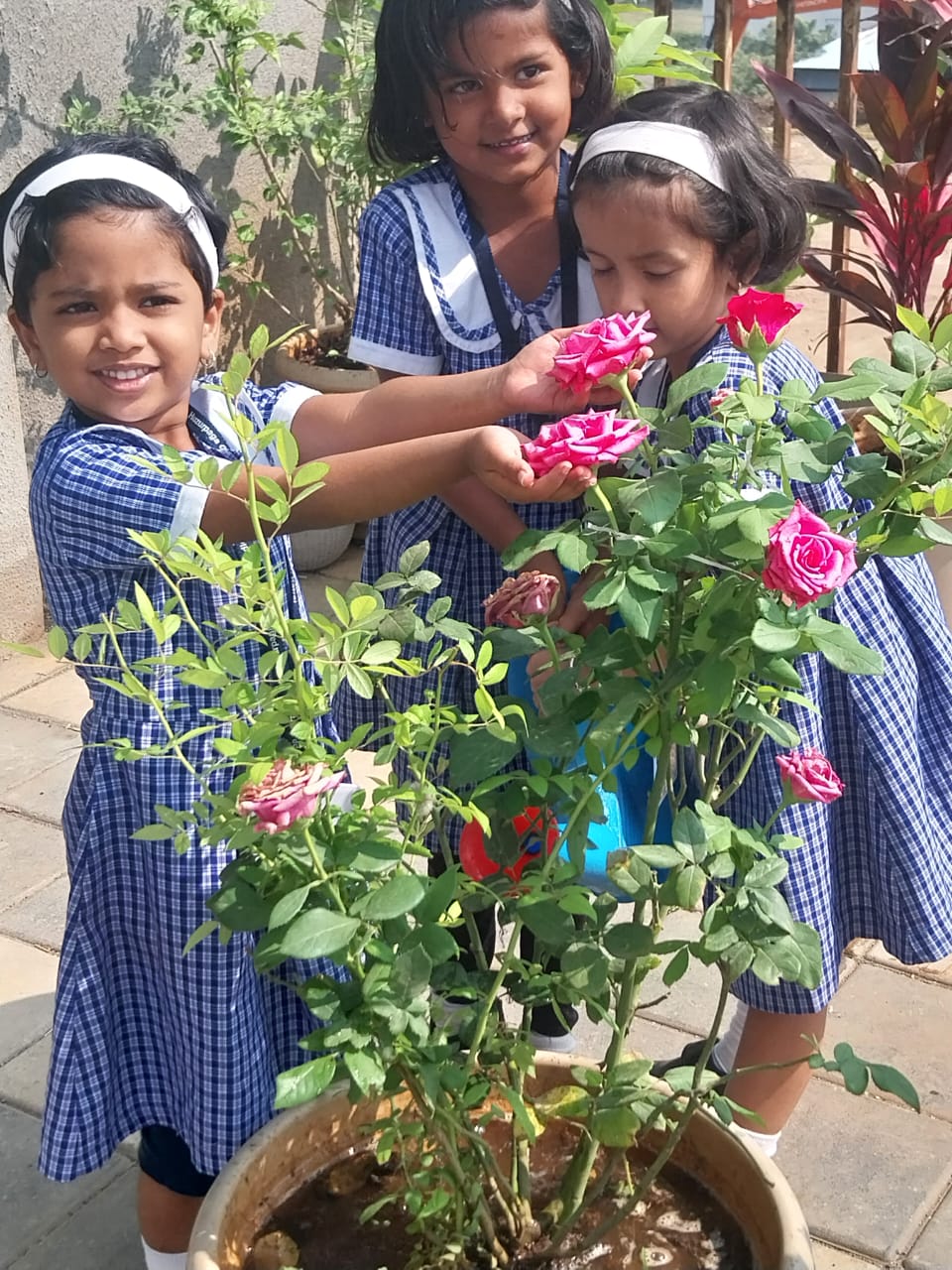
The school already had a thriving kitchen garden where students grow vegetables and learn from nature.
The new composting project completed the cycle.
Families bring Nirmalya from home.
The school converts it into compost.
The compost nourishes the garden.
The garden becomes a living classroom.
Waste becomes a resource.
Making Participation Easy
One reason many composting projects fail is that they expect people to make an extra effort.
This project did the opposite.
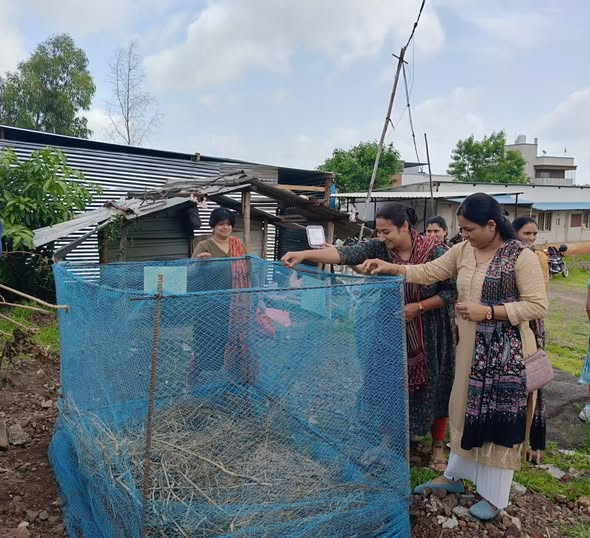
A porous composting unit was placed near the school entrance.
Students can simply deposit Nirmalya while entering the school.
Residents from the surrounding village can also contribute while passing by.
The school watchman helps ensure that only biodegradable Nirmalya enters the composter and that plastic bags or other waste do not get mixed with it.
Good design makes good behaviour easy.
Learning from Nature
Soon after the project began, something beautiful happened.
Marigold plants started growing naturally from the compost.
Butterflies began visiting the flowers.
The compost itself became a demonstration that nature wastes nothing.
What began as a composting project quietly transformed into the beginning of a butterfly-friendly garden.
Beyond the School Boundary
Mrs. Kirti Pandit realised that the project could serve not only students but the surrounding community.
Instead of asking people,
“Please don’t throw Nirmalya into the river.”
the school could offer a much simpler alternative:
“Bring it to the school. We’ll turn it into compost.”
Providing a practical alternative often creates greater participation than simply asking people to stop an existing practice.
Sustainability as School Culture
The Nirmalya composting project is only one part of the school’s sustainability journey.
The school has also joined Mission City Chakra’s Plastic-Free School initiative by encouraging parents to send children with:
- Steel tiffin boxes
- Steel water bottles
- Non-plastic textbook covers
The result is a school where sustainability is not taught only through lessons—it is experienced through everyday practices.
Why This Story Matters
Many environmental campaigns focus on awareness.
This school demonstrates the importance of creating systems.
By making composting convenient, useful and visible, the school has created a model that other schools can replicate.
One school’s experience can now help many others.
Implementation Learning
One lesson stands out from this journey.
People are far more likely to change when a meaningful alternative is available.
Instead of saying,
“Don’t throw Nirmalya into the river,”
the school says,
“Bring it here. We’ll transform it into life.”
That small change in approach has the potential to reduce river pollution while enriching school gardens across the city.
Principals on the Mission
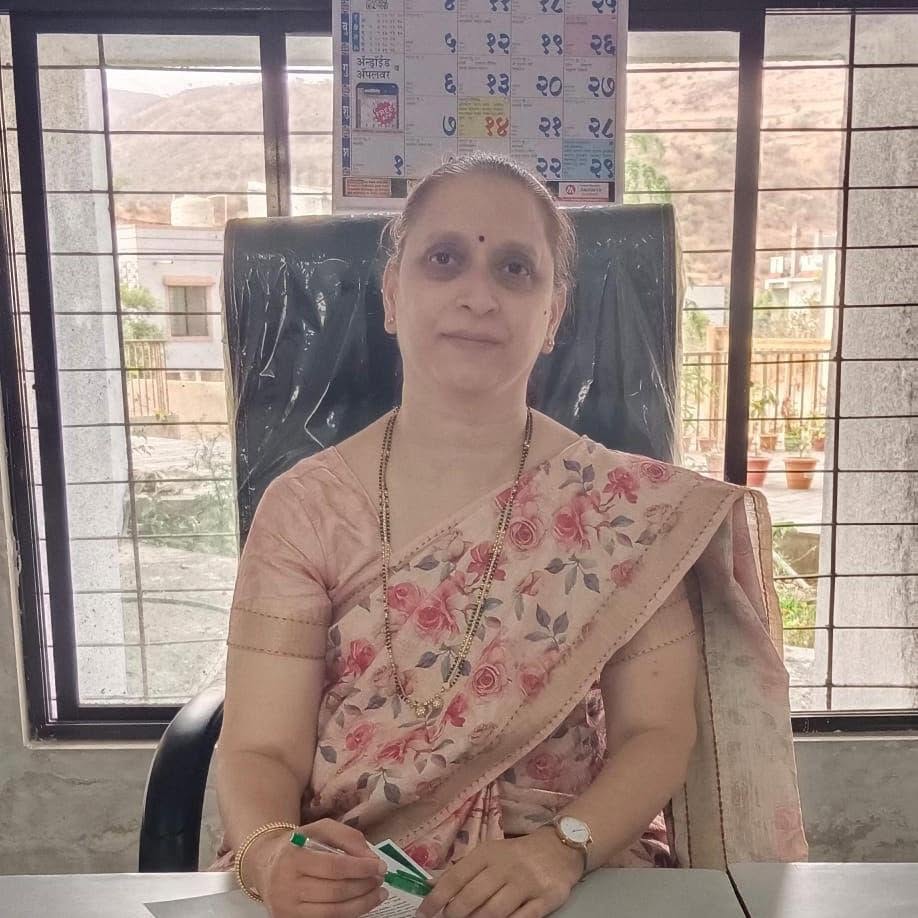
Kirti Pandit
Principal
School: Huzurpaga English Medium School, Mangdewadi, Katraj, Pune
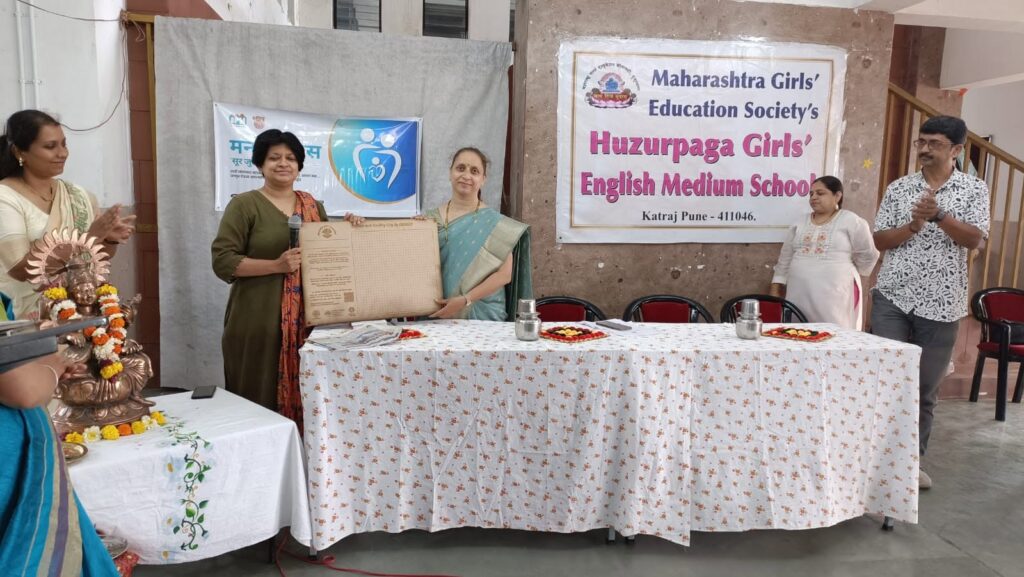
Mission City Chakra Impact Certificate: (Three Plastic Waste Reduction Appeals Implemented)
Mission City Chakra Initiatives Implemented
Steel Tiffin Policy
Steel Water Bottle Policy
No Plastic Textbook Covers
Sustainability Leadership
Community-based Nirmalya Composting Project
School Kitchen Garden
Compost used within the school campus
Butterfly-friendly garden through composting
Community participation in Nirmalya collection
Circular model connecting homes, compost and the school garden
Implementation Highlights
- Established a porous composting system near the school entrance for easy community participation.
- Encouraged parents and local residents to donate Nirmalya instead of disposing it into rivers or with mixed waste.
- Created a closed-loop system where compost enriches the school’s vegetable and flower gardens.
- Combined Mission City Chakra’s plastic waste reduction initiatives with organic waste management, creating a holistic sustainability model.
Mission City Chakra Learning
“Environmental awareness becomes lasting behaviour when schools create practical systems that make the sustainable choice the easiest choice.”
Mission City Chakra celebrates principals who transform schools into living laboratories of sustainability through policy, practice and community leadership.


