
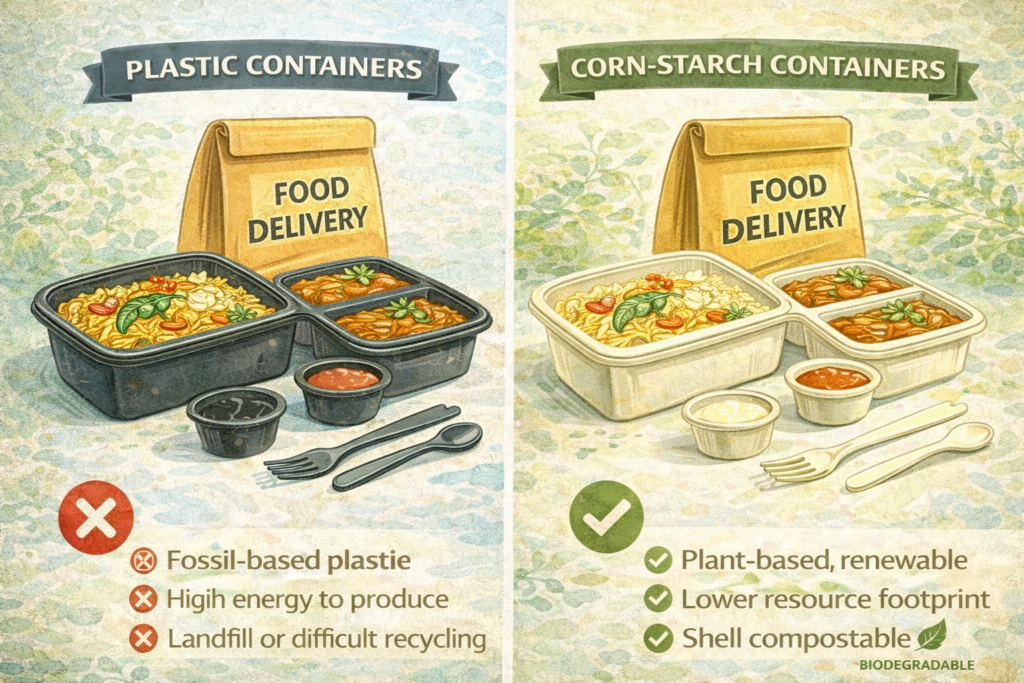
The problem with black plastic delivery containers
Businesses are replacing black plastic food containers with biodegradable crockery made from bagasse, areca leaf, corn-starch and other plant-based materials. Learn how these eco-friendly containers work, their benefits and limitations, and why restaurants are rapidly switching to them.
They are everywhere.
Open any food delivery bag and you’ll likely find:
black plastic boxes with clear lids
small round dip containers
plastic cutlery packs
plastic sealing films
They are:
multilayer plastic
often colored or carbon-black tinted (hard to detect by recycling scanners)
food-contaminated and oily
small-format packaging
Which means — in reality — most are never recycled.
They go to:
landfills
drains, rivers and beaches
informal burning sites
Even worse, when heated with food, low-quality plastic can leach chemicals into meals, especially hot and oily dishes. Black plastic also hides contamination, making workers reluctant to handle it.
So restaurants began asking:
“Is there a better way to send food?”
And businesses rose to the challenge.
What is biodegradable crockery?
Biodegradable crockery refers to plates, bowls, clamshell boxes and containers made from plant-based, compostable materials, such as:
bagasse (sugarcane residue after juice extraction)
areca (palm) leaves
wheat bran or rice husk blends
corn-starch / PLA bioplastic
pressed bamboo fibre or wood pulp
These containers:
hold hot food and curries
are strong and leak-resistant
break down naturally when composted
do not rely on fossil plastic as the main material
They are rapidly replacing black plastic delivery boxes in cities, hotels, cloud kitchens and event catering.
Bagasse containers — the most widely adopted
Bagasse is the fibre that remains after extracting sugarcane juice.
Instead of burning it as waste, manufacturers:
pulp it
mould it into shapes
heat press and sterilize
Result: sturdy off-white bowls, plates and takeaway boxes.
Why restaurants love bagasse containers
✔ handle hot gravies, rice and biryani
✔ oil- and leak-resistant when well-made
✔ microwave safe in many designs
✔ compostable with food waste
✔ aesthetically clean and premium
They directly compete with:
black PP/PS plastic containers
aluminium foil trays with plastic lids
In many Indian cities, bagasse is fast becoming the standard eco-delivery box.
Areca leaf crockery – nature’s own plate
Areca leaves fall naturally without cutting the tree.
They are:
washed
sun-dried
pressed into shape
The result is rustic, beautiful dinnerware — often used for:
weddings
community meals
eco festivals
temple bhojans
Pros:
✔ 100% natural leaf
✔ fully home-compostable
✔ supports rural livelihoods
Cons:
✖ shapes are limited
✖ heavier to ship
✖ less standardized than bagasse
Corn-starch and PLA containers
These look closest to plastic.
They are made from plant sugars fermented into PLA bioplastic and moulded into:
bowls
hinged burger boxes
small takeaway tubs
Pros:
✔ similar feel to plastic
✔ suitable for branding
✔ industrially compostable
Cons:
✖ require industrial composting, not normal soil
✖ softening issues with very high heat
✖ risk of “greenwashing” if mixed with normal waste
They work best when restaurants have composting tie-ups.
Rice husk, wheat bran, bamboo fibre
Emerging innovators are experimenting with:
rice husk–polymer blends
wheat bran molded plates
bamboo-fibre composite containers
These are especially powerful because they use agricultural byproducts, turning waste into products — just like biochar in your earlier work.
Why businesses are moving toward biodegradable crockery
1. Plastic bans and compliance pressure
State and national regulations now restrict:
single-use plastic plates
thermocol/Styrofoam
many multilayer food containers
Biodegradable crockery offers a compliant alternative without changing business models.
2. Customer awareness & brand perception
Urban consumers increasingly notice:
packaging materials
“eco-friendly” messaging
restaurant responsibility
Restaurants gain:
positive reviews
social media visibility
corporate clients who need ESG alignment
Packaging becomes part of brand identity.
3. Health & safety perception
People intuitively trust:
off-white plant-based bowls
leaf plates
uncolored natural textures
over black petroleum-plastic containers.
This is a huge emotional-design win.
Honest limitations to acknowledge
Biodegradable crockery is not perfect.
still single-use
costs more than cheap plastic
needs good moisture-resistant design
composting systems are still developing
some products need industrial composting, not home composting
The real long-term solution remains:
Reuse where possible.
Borrow, return, wash, repeat.
But biodegradable crockery is an important transition technology, especially for:
events
street vendors
delivery kitchens
quick service restaurants
where reuse systems aren’t yet practical.
What happens after disposal?
Best-case pathway:
collected separately with food waste
composted in decentralized or industrial units
returns to soil as nutrient-rich compost
Worst-case pathway (still common):
thrown with mixed waste
landfill or incineration
Even then:
bagasse/areca/bran degrade faster
fewer microplastics are created
no toxic styrene or PVC byproducts
System design will decide the final impact — but material design already moves us in the right direction.
Where this fits your philosophy
Biodegradable crockery embodies:
reducing waste by design, not by guilt.
Instead of asking people to:
wash better
segregate perfectly
recycle complex plastics
…we change the material and product itself so that:
after use, nature can take it back
business models stay functional
citizens don’t need perfect behaviour
This is upstream change.
Final thought
Food delivery is here to stay.
The question is not:
“How do we make people feel less guilty about plastic?”
The real question is:
“How do we redesign food containers so waste never becomes a problem in the first place?”
Biodegradable crockery made from:
bagasse
areca leaf
corn-starch
bamboo fibre
agricultural residues
shows that the answer already exists — in farms, leaves, fibres and imagination.