
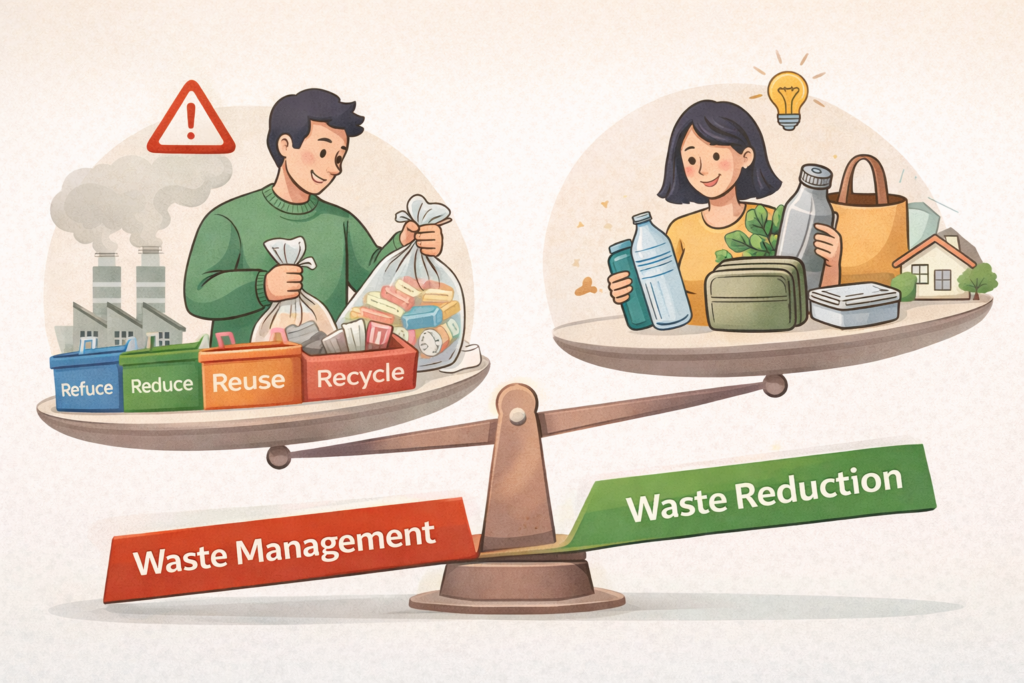
A simple decision-making guide that helps households choose safer, sustainable products using a Product Audit Matrix based on utility, health impact, material choice, and recyclability.
Introduction: Why “Recyclable” Is the Wrong First Question
Most people try to be responsible consumers.
They ask questions like:
Is this recyclable?
Is this eco-friendly?
Where do I throw this?
But these questions come too late.
By the time a product reaches your home, 90% of its environmental and health impact is already decided—by its material, design, and intended lifespan.
This is why we need a Product Audit Matrix:
a simple way to decide before buying, not after discarding.
From Waste Management to Better Decision Making
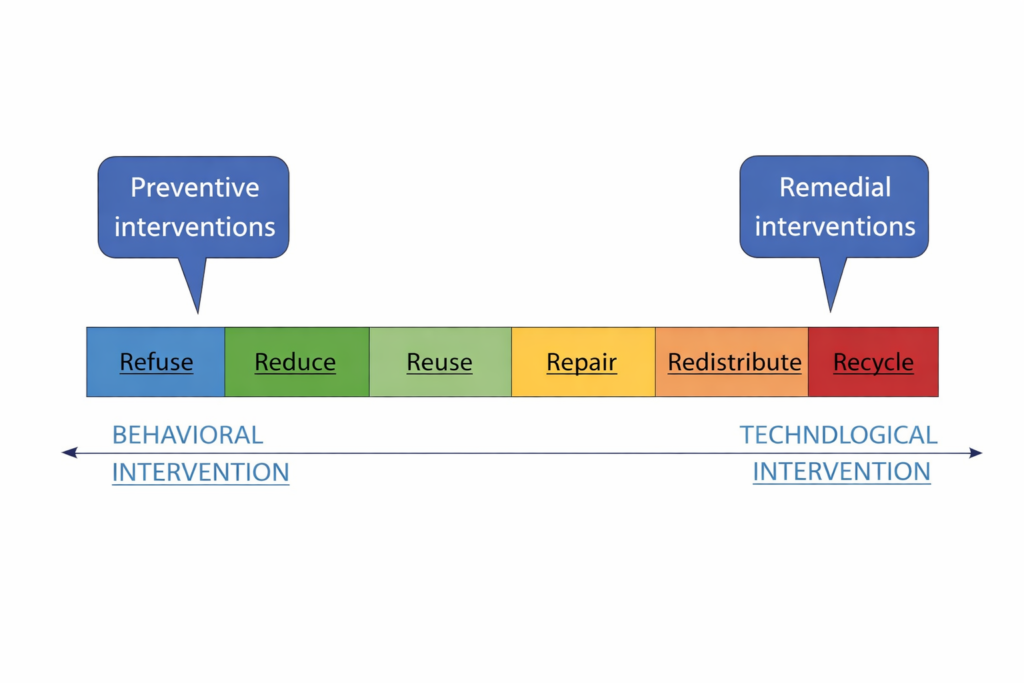
The most sustainable choice is often the product you never bring home.
Instead of asking “How do I dispose of this?”, the matrix asks:
Do I really need this?
Can I live easily without it?
Does it touch food, water, or heat?
What material is it made of?
Does it quietly harm health—now or later?
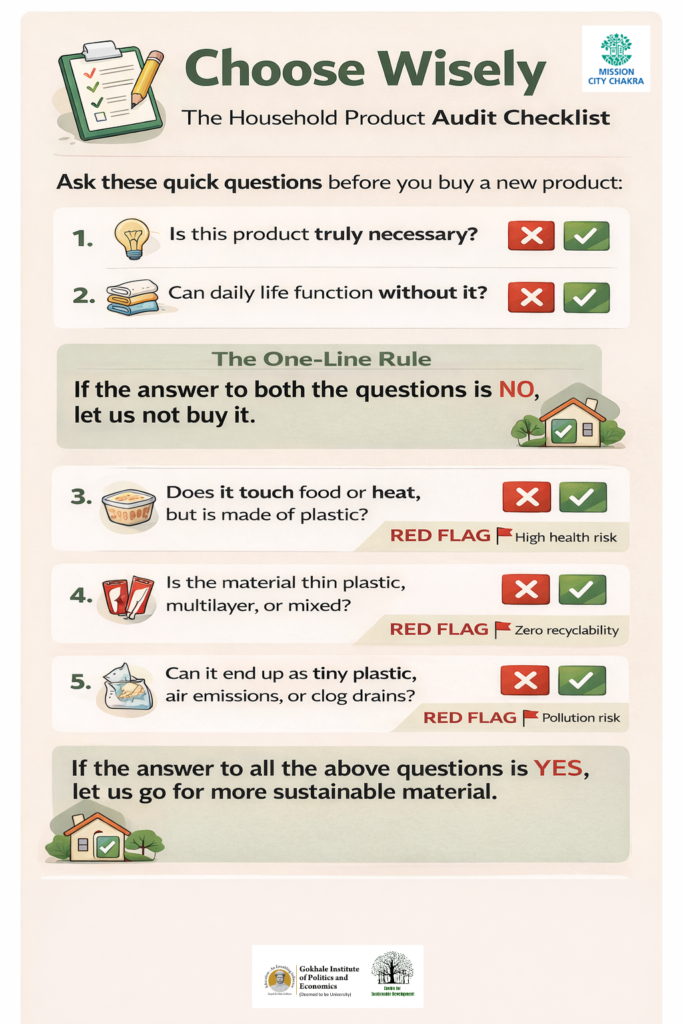
The 6-Question Product Audit (The Easy Way)
You don’t need technical knowledge.
Just remember these six questions, in this order:
1️⃣ Utility: Do I Truly Need This?
Ask:
Does this product solve a real problem?
Or is it only saving a few seconds of convenience?
Example:
Steel container → real utility
Cling wrap → convenience, not necessity
If utility is low, stop here.
2️⃣ Eliminability: Can I Live Normally Without It?
Ask:
Have people lived well without this before?
Is there a reusable alternative already in my home?
Example:
Wet wipes → easily eliminated
Shampoo sachets → eliminated by refill bottles
If it can be eliminated, don’t redesign it—remove it.
3️⃣ Food + Heat + Plastic = Red Flag
This is one of the simplest and most powerful rules.
Ask:
Does this product touch food?
Does it touch heat?
Is it made of plastic?
If the answer is yes to all three, it is a design failure, not a user error.
Examples:
Plastic food containers
Plastic tea strainers
Melamine plates
These should be replaced, not “used carefully”.
4️⃣ Material Check: What Is It Made Of?
You don’t need to know polymer codes.
Just group materials mentally:
Low-risk, durable materials
Steel
Glass
Ceramic
Cloth
Wood (untreated)
High-risk, short-life materials
Thin plastics
Multi-layer packaging
Mixed materials
Items that cannot be repaired
When in doubt, choose older materials.
They survived because they worked.
5️⃣ Direct Health Impact: Does It Enter the Body?
Ask:
Can this leach into food or water?
Can it shed microplastics?
Is it used daily?
Health impacts are often slow and invisible, which is why they are ignored.
Common sources of direct exposure:
Plastic water bottles
Plastic cutting boards
Nylon spatulas
Disposable cups
6️⃣ Indirect Health Impact: Where Does It Go After Use?
Even if a product doesn’t touch your body, ask:
Does it clog drains?
Does it break into microplastics?
Does it get burned or dumped?
If it harms air, water, or soil, it eventually harms people.
This is how:
Sachets end up in rivers
Wet wipes choke sewage systems
Mixed plastics pollute groundwater
The 30-Second Decision Method (For Real Life)
When shopping or ordering food, use this mental shortcut:
Low utility + plastic + food/heat + no recycling = NO
Or more simply:
❌ Reject if:
It is single-use
It touches food or heat
It cannot be reused or repaired
✅ Prefer if:
It is durable
It lasts for years
It is safe without special care
This rule alone can eliminate 60–70% of household waste without effort.
Why This Is Not About “Lifestyle Choices”
This matrix is not about personal perfection.
It is about:
Changing defaults
Influencing procurement
Guiding schools, RWAs, and offices
When institutions shift materials, thousands of people benefit automatically—without daily decision fatigue.
That is why this framework works so well in:
Schools
Hostels
Offices
Housing societies
City procurement systems
The One-Line Rule to Remember
If a product has low utility and high health impact,
it should not enter your home—recyclable or not.
Conclusion: Wise Choices Are Simple, Not Complicated
Sustainability does not require:
constant research
expensive alternatives
perfect behaviour
It requires better questions at the right moment.
The Product Audit Matrix helps households:
reduce waste upstream
protect health quietly
choose materials that last
And most importantly, it shifts the focus from managing waste
to preventing it from being created at all.