
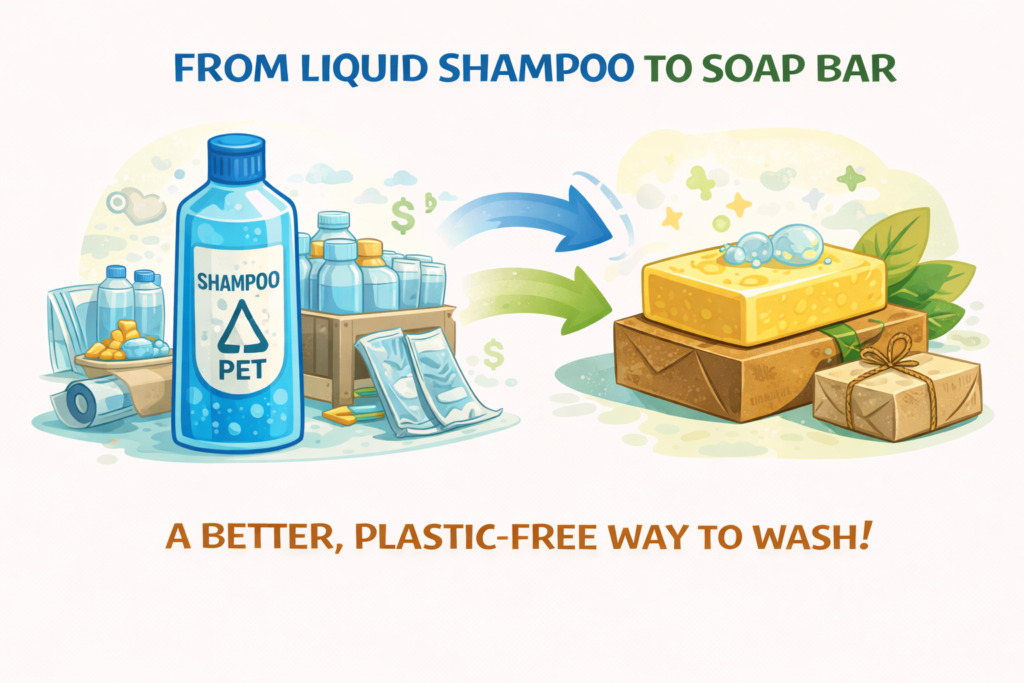
Shampoo bars are replacing liquid shampoo in plastic bottles. Learn how solid shampoo cuts packaging waste, eliminates PET bottles, reduces transport emissions, and saves resources by removing water from the product.
A small change in form, a big change in impact
Most of us grew up thinking shampoo must be liquid in a plastic bottle.
But the truth is:
liquid shampoo is mostly water
PET bottles add huge packaging footprints
refill sachets are usually multi-layer plastic (MLP) and non-recyclable
transport emissions increase because we ship diluted products
A shampoo bar flips that logic.
It is simply:
shampoo without added water
pressed into a solid bar
packed in cardboard instead of plastic
The user adds water while bathing — something already available in every bathroom.
Why solid shampoo matters for the planet
1️⃣ Less packaging — no PET bottle needed
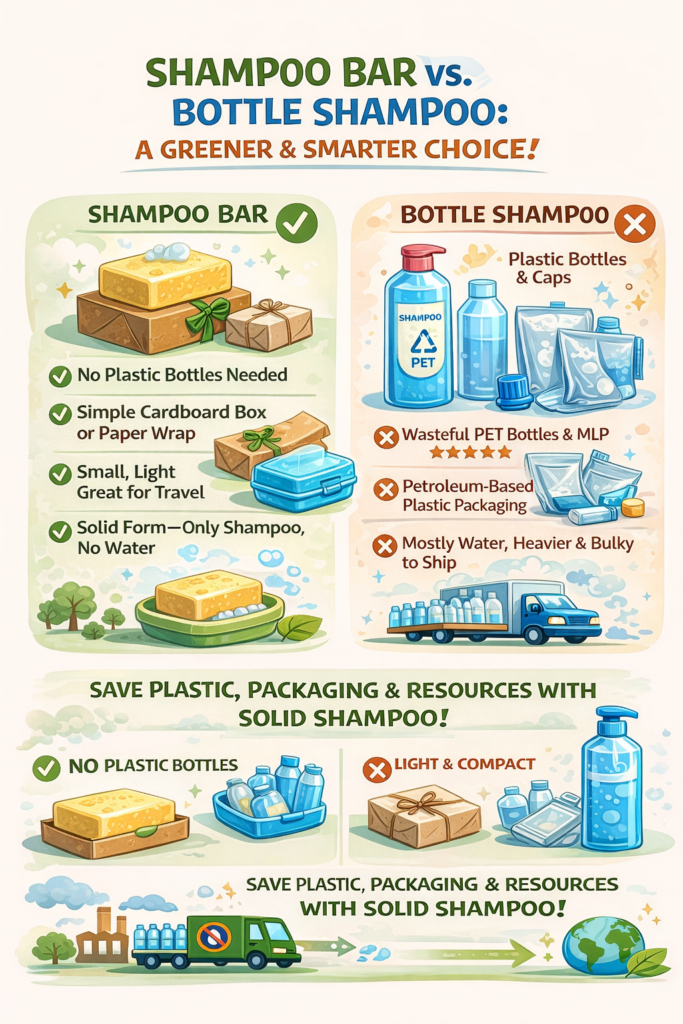
Liquid shampoo almost always means:
PET bottle
plastic cap
plastic label
plastic shrink wrap for retail logistics
A shampoo bar typically needs only:
a small paper/cardboard box
sometimes nothing more than a paper wrap
That means:
fewer polymers produced
less plastic waste generated
no labels, pumps, spouts, or multilayer films
This alone is a huge design win.
2️⃣ No need for shampoo sachets while travelling
Today, millions of tiny shampoo sachets are sold daily.
These are:
multi-layer plastic
nearly unrecyclable
easily littered
long-lived in soil and rivers
A shampoo bar:
fits in a simple soap case
needs no sachets
is spill-proof
airplane and trek friendly
3️⃣ Lower transport emissions — we stop shipping water
Liquid shampoo = concentrated chemicals + lots of water.
Water is heavy. Heavy products mean:
higher transport fuel use
more emissions
more storage cost
bigger retail shelf space
Solid shampoo:
is smaller
lighter
more pieces per carton
less fuel required per wash delivered
The same “don’t ship water” logic that made powdered handwash smart applies here.
4️⃣ Less need for preservatives
Water invites:
microbial growth
spoilage risk
need for strong preservatives
Solid bars:
have very little water
are inherently more stable
often reduce preservative load
Better for health and wastewater ecology.
🧪 Breaking down the shampoo bar package
| Component | Material | Recycling / Reuse Potential |
|---|---|---|
| Shampoo bar | concentrated shampoo solids | biodegradable depending on formulation |
| Outer box/wrap | paper/cardboard | widely recyclable & compostable |
| Travel storage case (optional) | reusable plastic/metal/wood case | reusable for years |
No MLP, no PET bottle, no pump.
⭐ Sustainability Matrix Rating
(5 stars = best)
| Criterion | Score | Comments |
|---|---|---|
| Packaging reduction | ⭐⭐⭐⭐⭐ | Eliminates PET bottles entirely |
| Use of recyclable material | ⭐⭐⭐⭐⭐ | Paper/cardboard widely recyclable |
| Product transport efficiency | ⭐⭐⭐⭐ | Light weight, concentrated |
| Reusability | ⭐⭐⭐⭐ | Bar lasts many washes |
| Overall recyclability of packaging | ⭐⭐⭐⭐⭐ | Near 100% if paper is clean |
| Chemical load | ⭐⭐⭐ | Depends on brand & formulation |
| User convenience (home use) | ⭐⭐⭐⭐ | Simple and compact |
| User convenience (travel) | ⭐⭐⭐⭐⭐ | Excellent replacement for sachets |
🟢 Overall rating
⭐⭐⭐⭐½ out of ⭐⭐⭐⭐⭐
A highly sustainable upgrade compared to liquid shampoo in plastic bottles or MLP sachets.
Trade-offs and honest limitations
To stay unbiased:
not all bars suit all hair types
cheap bars may be harsh (alkaline or high detergent)
some need a small adjustment period
storage in very humid climates needs care
marketing sometimes greenwashes poor-quality bars
But even with those considerations:
the design logic of waterless, bottle-free shampoo remains extremely strong