Butterfly Garden at Schools
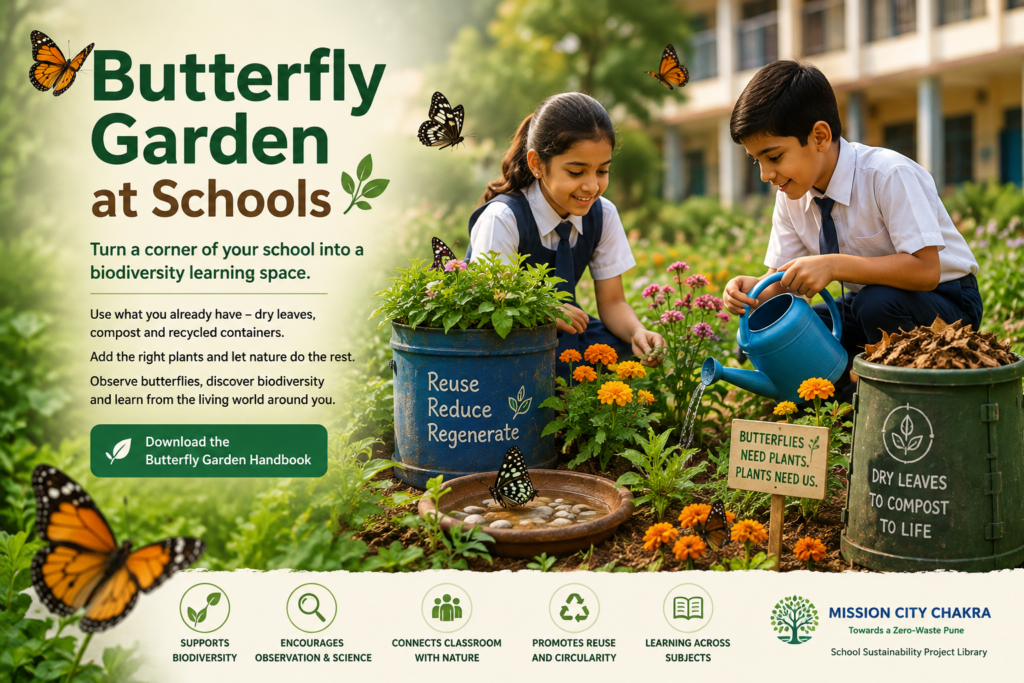
Turn a corner of your school into a biodiversity learning space.
A butterfly garden can begin with a few plants and the resources already available at school. Dry leaves can become soil, discarded containers can become planters, and the garden can become a living classroom where students observe butterflies and other forms of life.
1. WHY A BUTTERFLY GARDEN?
A butterfly garden can:
- 🦋 Support local biodiversity
- 🌱 Create a green learning space
- 🔬 Provide opportunities for observation and scientific inquiry
- ♻️ Demonstrate reuse and circularity
- 👩🏫 Connect classroom learning with the natural world
A garden can become a classroom.
This is where I’d introduce your important idea:
We see the butterfly garden not simply as landscaping, but as a School Biodiversity Learning Space.
2. A CIRCULAR BUTTERFLY GARDEN
Use what the school already has
Dry leaves
↓
Soil / Compost
↓
Plants
↓
Butterflies & Biodiversity
↓
Seeds / New Growth
Alongside it:
Old buckets / paint containers → Reused planters
A short paragraph:
The project brings together two MCC ideas: reducing waste and creating biodiversity. Schools can use dry leaves and compost generated on campus, reuse suitable discarded containers as planters and create habitat for butterflies and other organisms.
3. HOW TO START
01. Find a Space
Choose a sunny, relatively undisturbed corner of the campus.
02. Use What You Have
Use existing garden beds, dry leaves, compost and suitable discarded containers.
03. Choose Plants
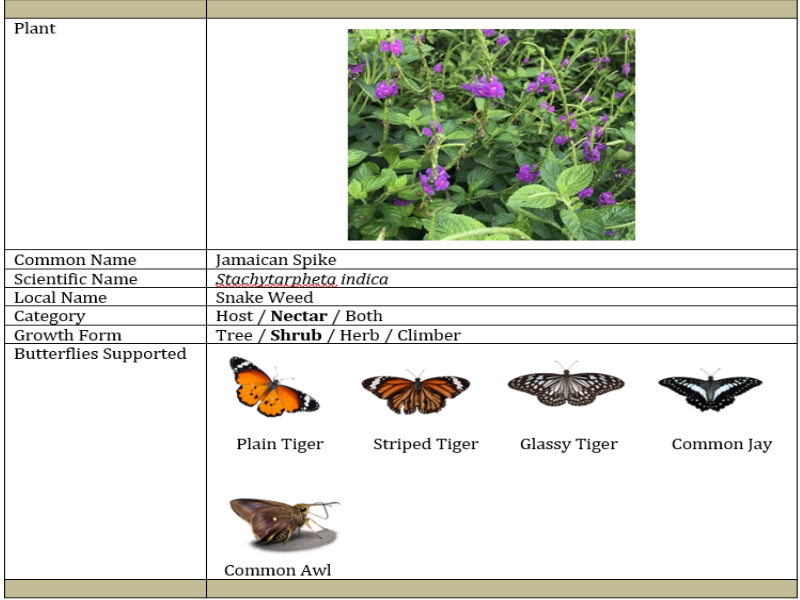
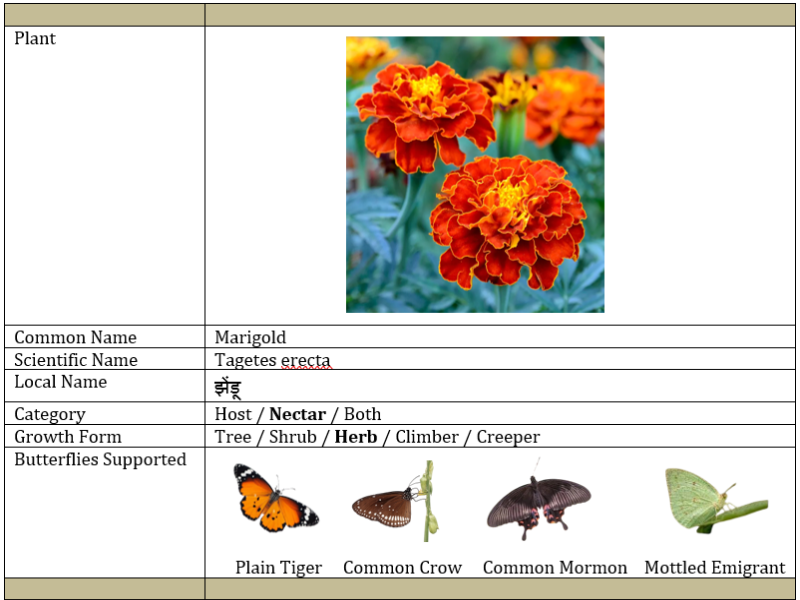
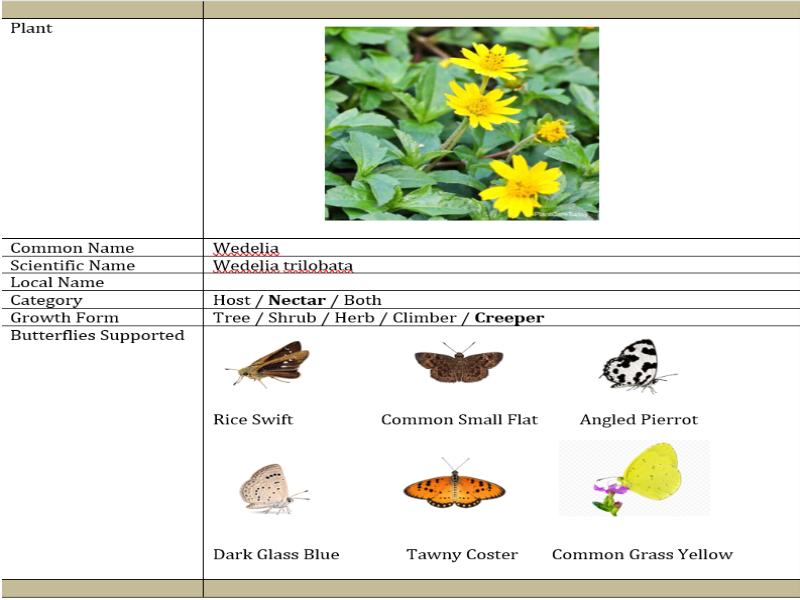
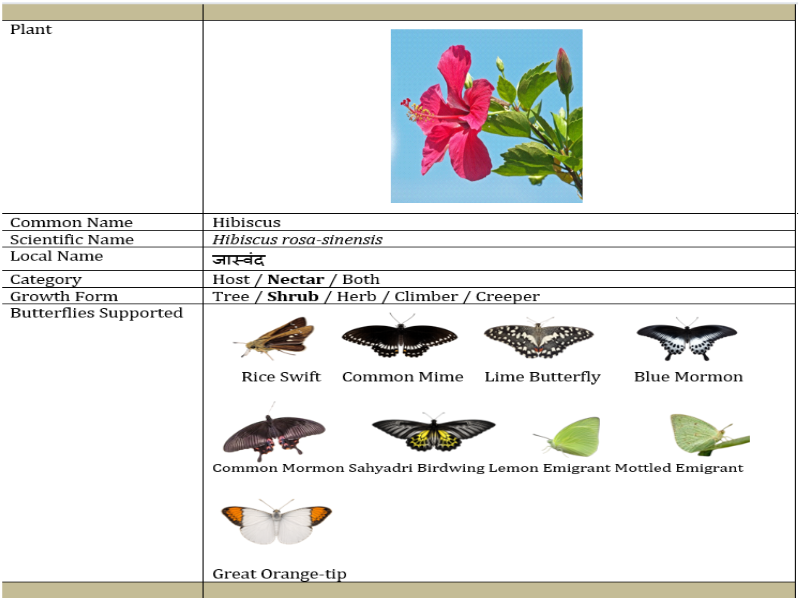
Combine host plants and nectar plants suitable for your location.
04. Let Nature Happen
Avoid pesticides and allow caterpillars and other organisms to become part of the garden.
05. Observe & Learn
Let students document butterflies, caterpillars, plants and other biodiversity.
For detailed planning →
4. START SMALL
You don’t need a large garden to begin.
One plant
Start observing.
Three plants
Create a small biodiversity corner.
Existing garden
Add suitable host and nectar plants.
More space
Build a larger biodiversity learning area.
Start with what you have rather than waiting for the perfect project.
5. PLANT & BUTTERFLY LIBRARY
Explore the Plant & Butterfly Library
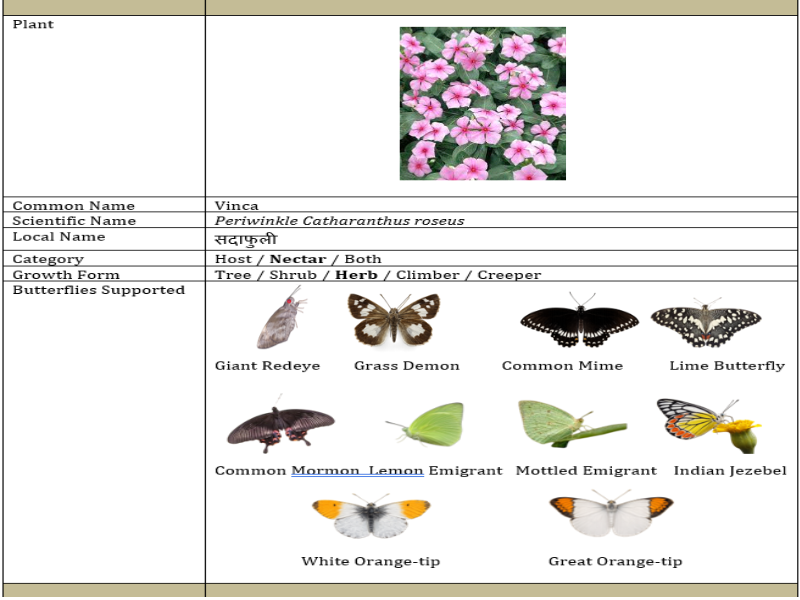
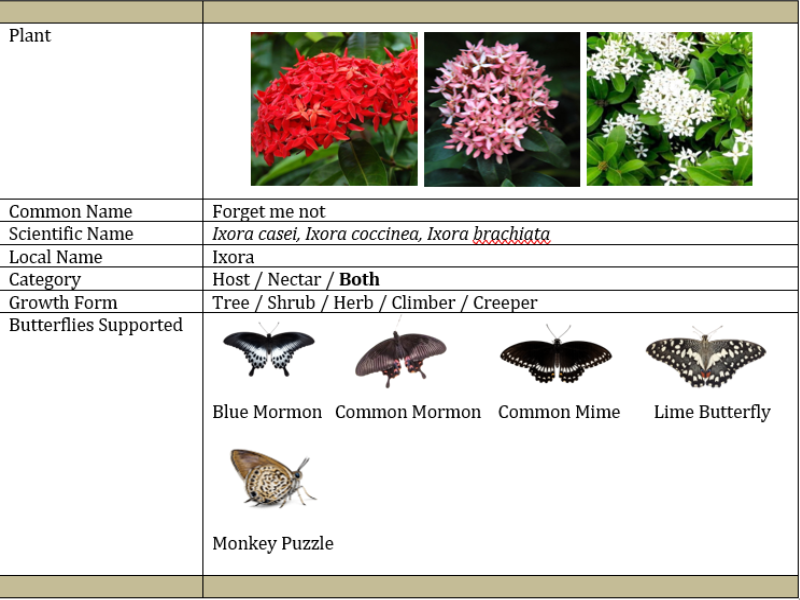
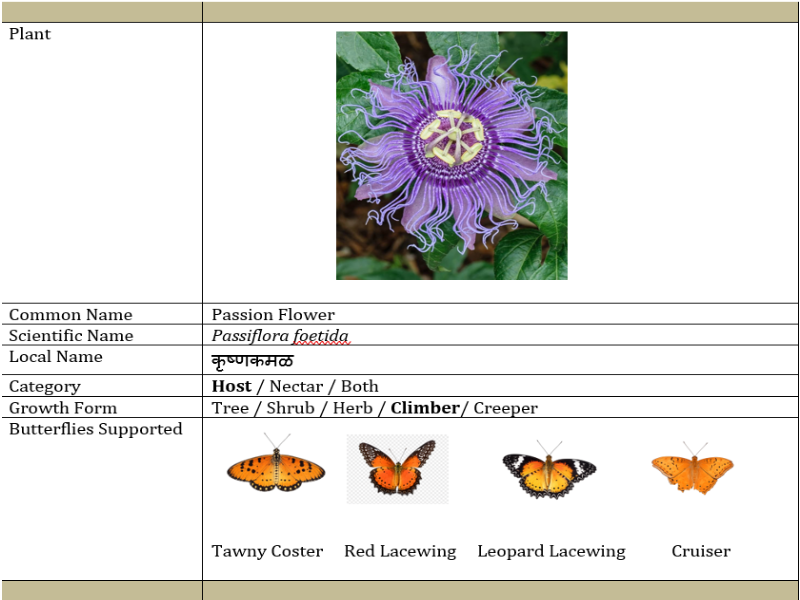
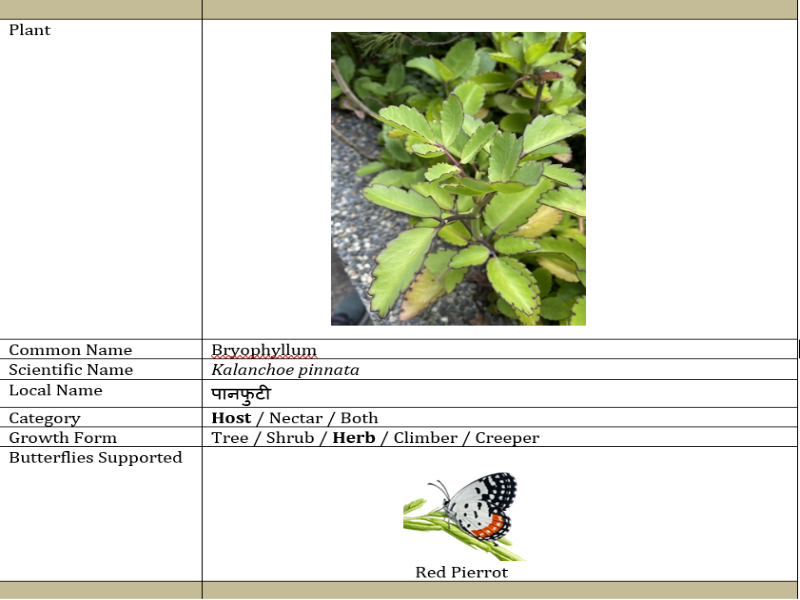
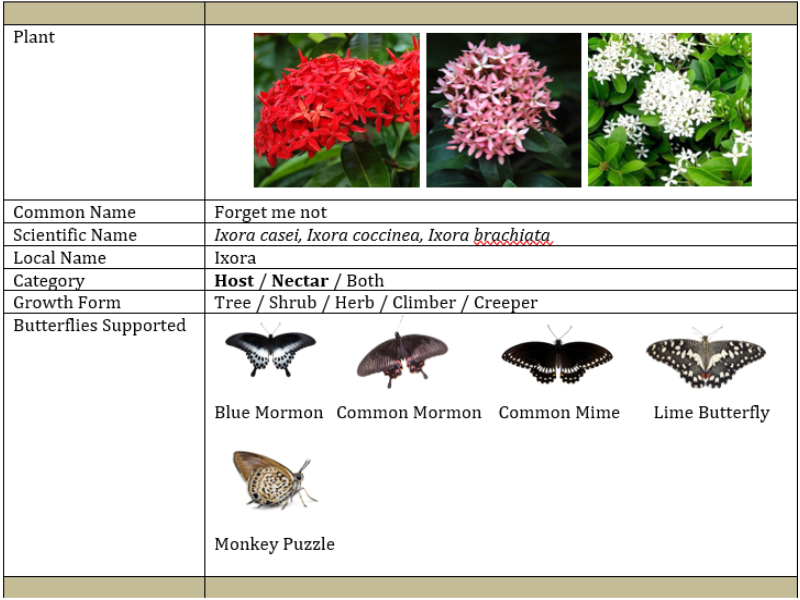
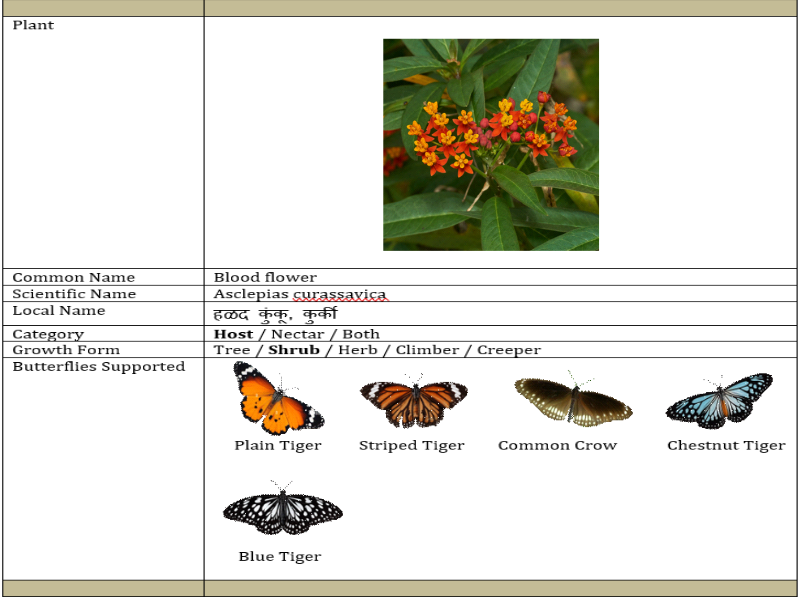
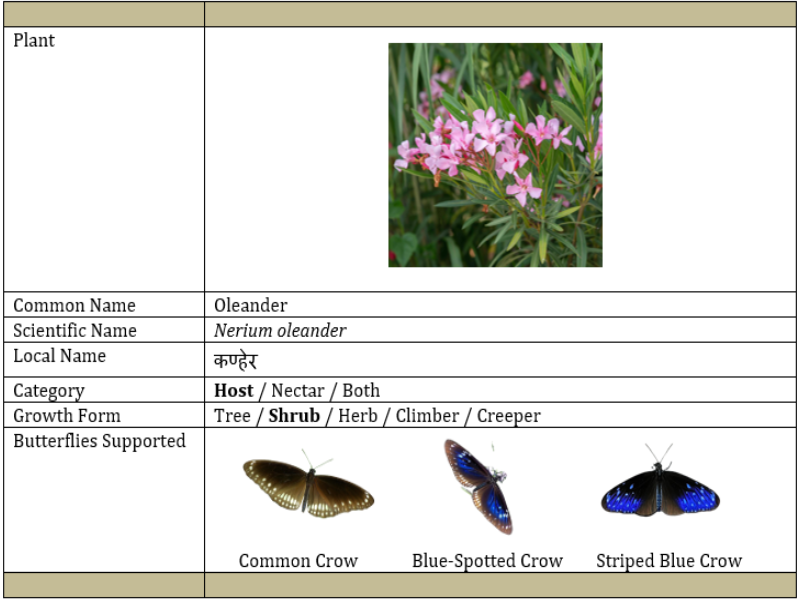
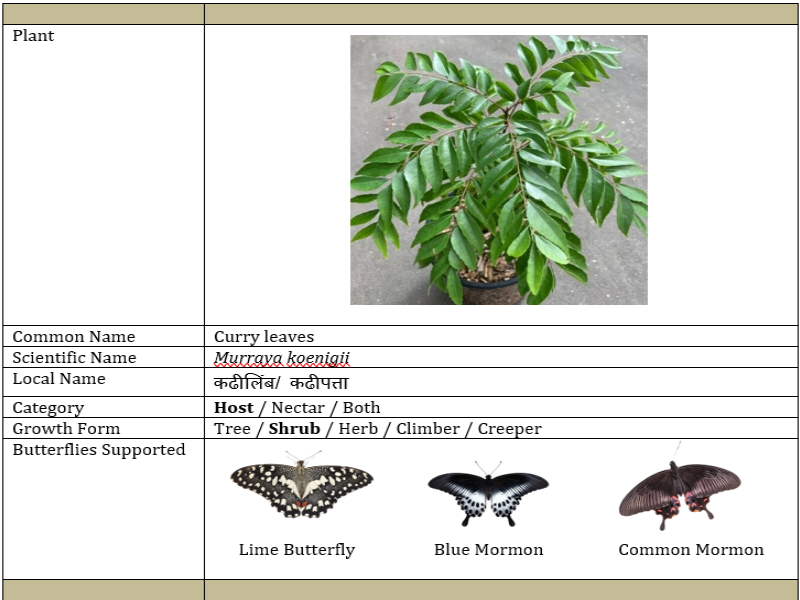
Explore plants suitable for butterfly gardens and discover the butterflies associated with them.
HOST PLANTS
NECTAR PLANTS