
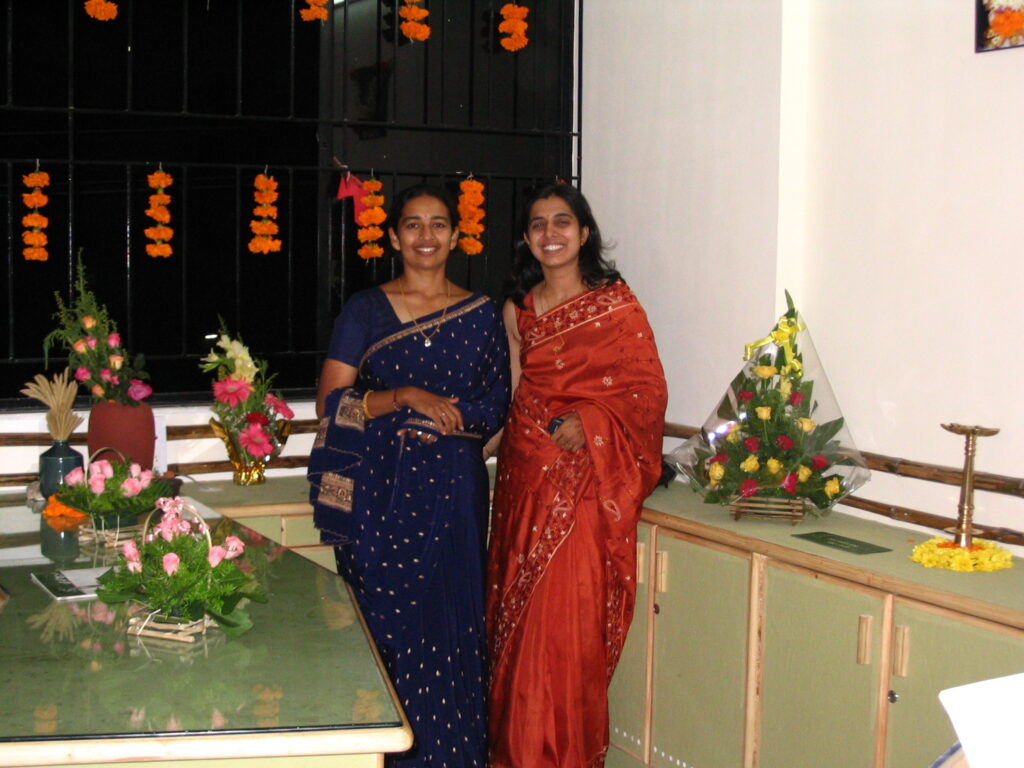
How Oikos Created a Sustainable Office That Has Lasted 20 Years
Most offices begin with questions like:
“Which furniture should we buy?”
“What colour should the walls be?”
“Should we have glass cabins?”
When Oikos Ecological Services moved into its new office in Pune in 2006, they began with a completely different question.
Can an office itself become an expression of our environmental values?
Twenty years later, the answer quietly surrounds them.
Instead of following conventional office design trends, Oikos built a workspace that continues to demonstrate the principles they advocate in their ecological work every day.
Their office is not a showcase of expensive green technologies.
It is a showcase of better decisions.
Sustainability Begins Before Construction
Most interior projects begin with selecting finishes and furniture.
Oikos began by examining materials.
Every option was evaluated not only for appearance and cost but also for its environmental footprint.
Their guiding questions included:
- Is it made from virgin material?
- Can an existing material be reused?
- Is it biodegradable?
- Can it last for decades?
- Does it generate unnecessary waste?
This shifted the conversation from decoration to sustainability.
Giving Waste Wood a Second Life
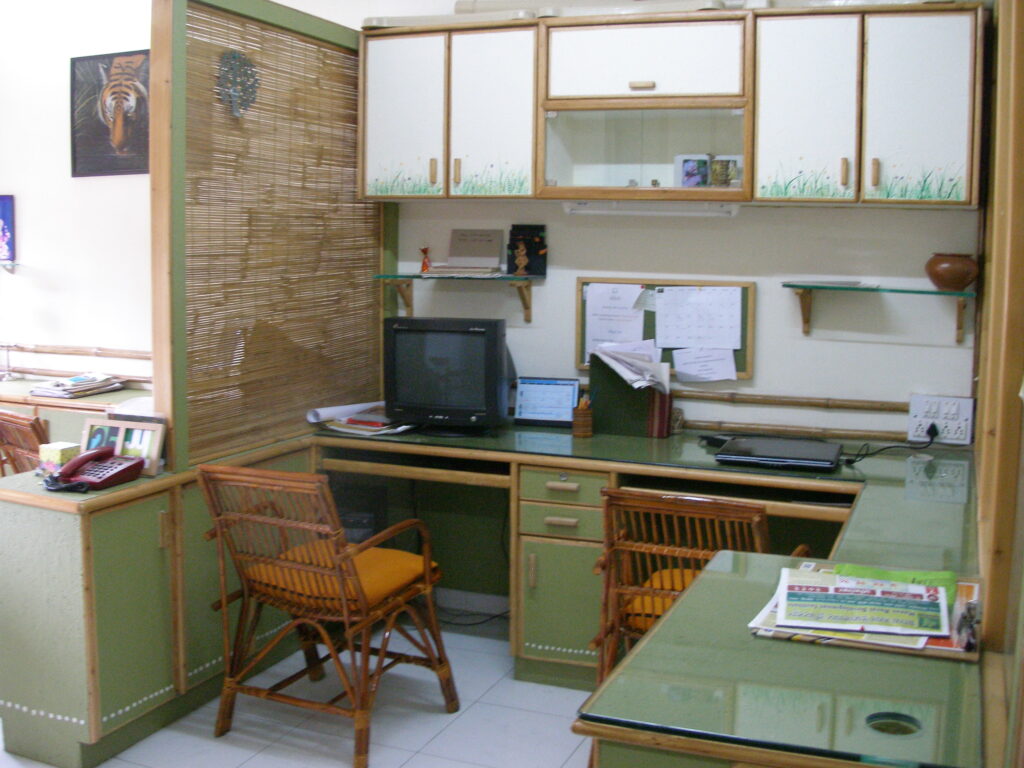
One of the most important decisions was choosing reclaimed chipboard.
Instead of using new timber, the office furniture was built using chipboards manufactured from compressed waste wood. Even better, the boards themselves had already completed one life as industrial packing material before being purchased as scrap.
The decision reflected three important circular economy principles:
- Refuse unnecessary virgin materials
- Reuse materials that still have useful life
- Support recycled products
The result demonstrates that good design does not necessarily require new resources.
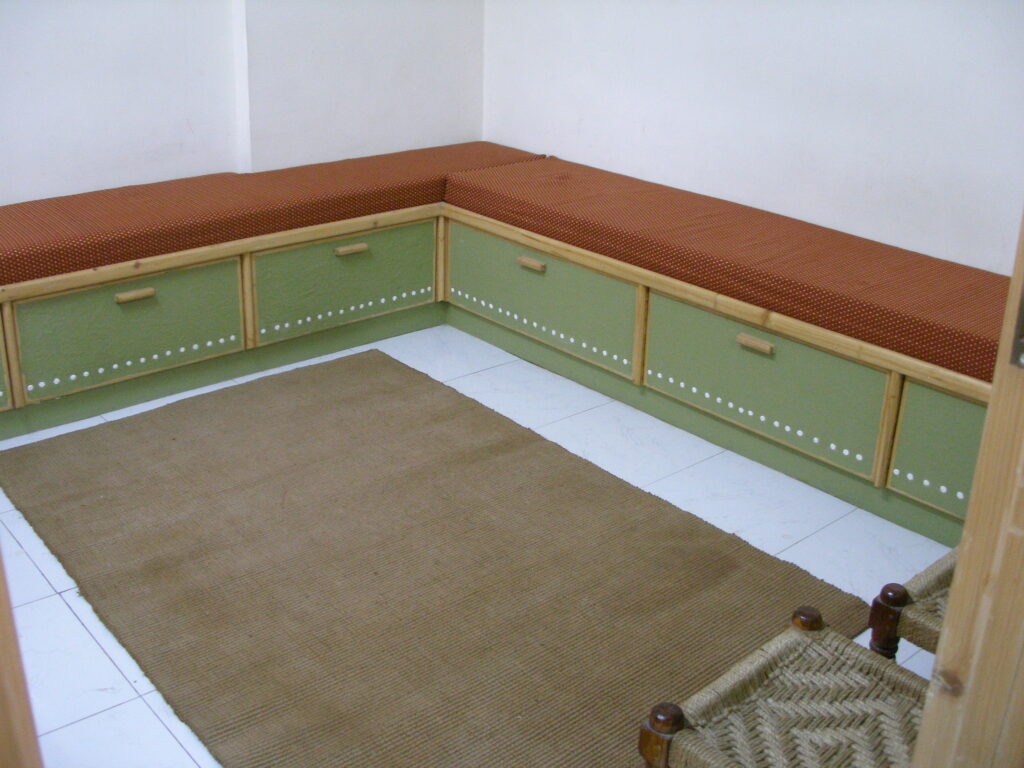
Designing with Less Instead of More
Modern offices often rely on multiple cabins, partitions and decorative elements.
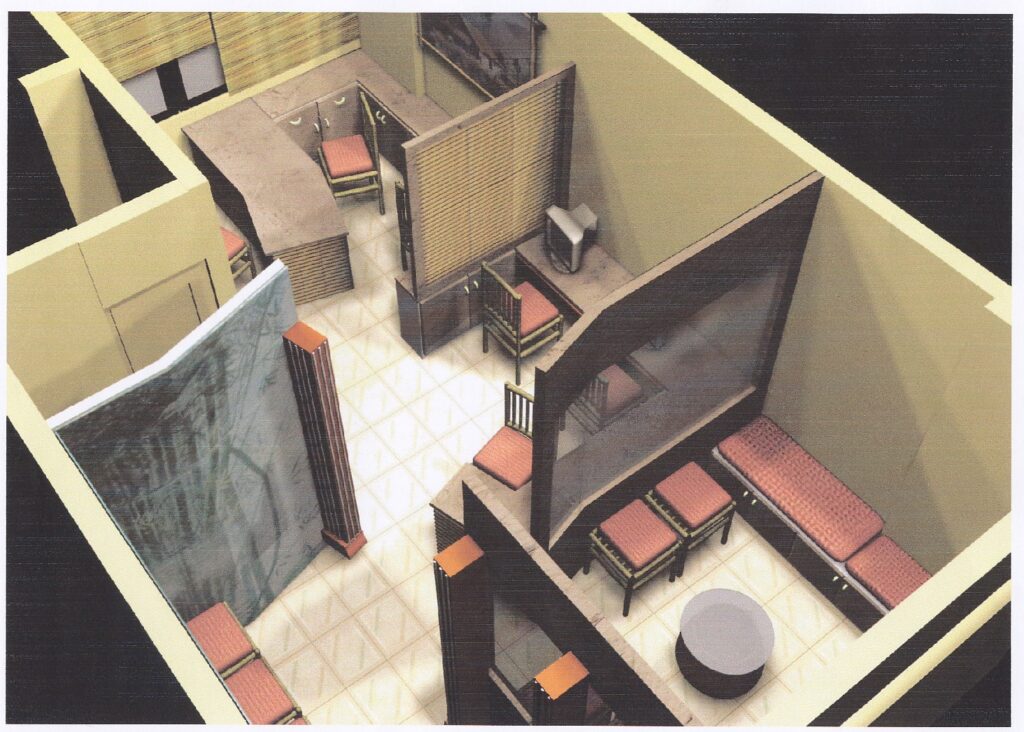
Oikos deliberately chose an open workspace.
This decision allowed:
- better airflow,
- more natural light,
- collaborative working,
- and lower material consumption.
Reducing physical barriers also reduced resource use.
Sometimes the most sustainable material is the one you never need to buy.
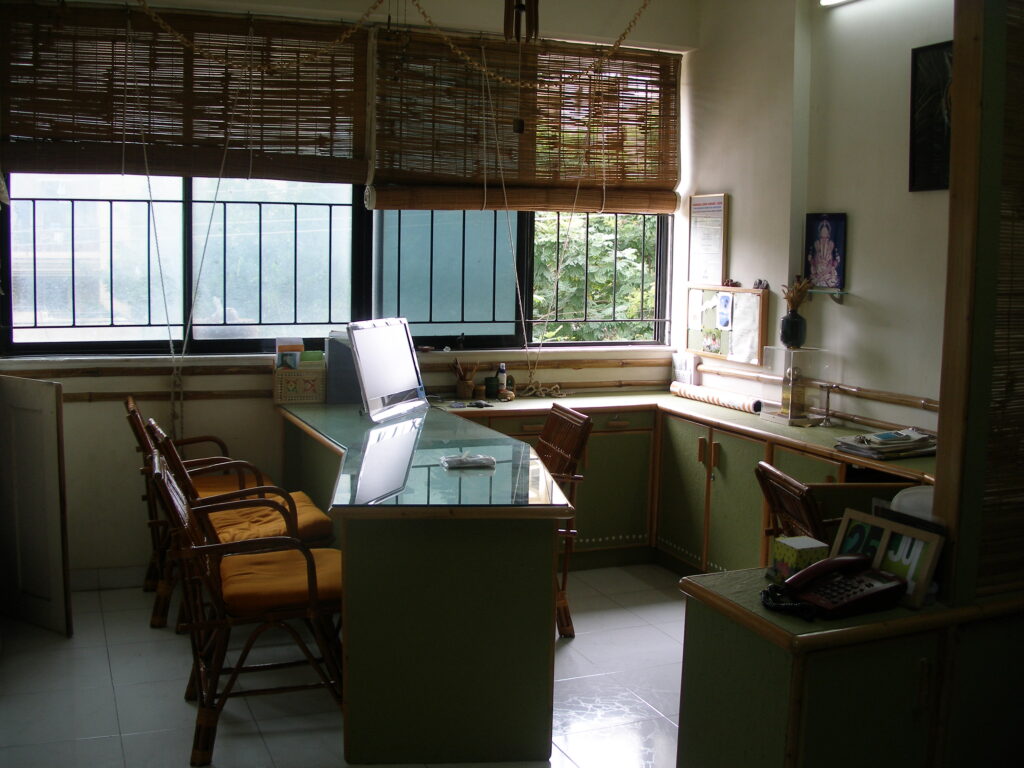
Keeping What Already Works
Perhaps the most inspiring part of the office is what they did not change.
Instead of replacing perfectly functional components simply to create a modern appearance, they retained:
- the original flooring,
- builder-provided bathroom,
- sliding windows,
- exposed structural beams.
There was no false ceiling.
No unnecessary demolition.
No construction waste generated simply for aesthetics.
Every retained element represented the principle of Refuse and Reduce in action.
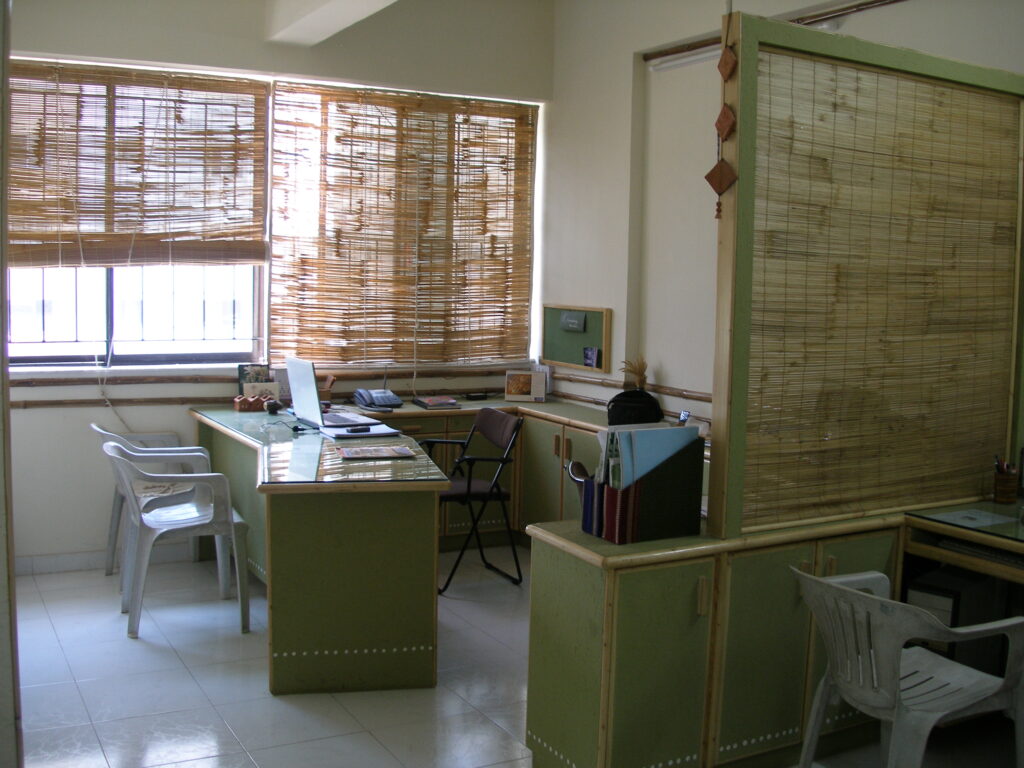
Bamboo Solved an Engineering Problem
Electrical wiring usually requires cutting walls and installing plastic conduits.
Oikos explored another solution.
The wiring was left exposed and covered using half-cut bamboo, fixed with simple screws.
The approach eliminated unnecessary wall cutting while replacing plastic with a renewable natural material.
It also added warmth and character to the workspace.
Supporting Local Craftsmanship
Sustainability also influenced purchasing decisions.
Instead of factory-made alternatives, the office incorporated:
- handcrafted bamboo blinds,
- bamboo partitions,
- natural wood,
- cotton furnishings.
Many of these were sourced from local artisans.
The result demonstrates that sustainability can simultaneously support local livelihoods.
Earthy Colours Without Toxic Paints
The chipboard furniture was painted directly instead of being covered with laminate.
The team selected low-VOC, lead-free, water-based paint, reducing indoor air pollution while avoiding unnecessary finishing materials.
The search for the perfect earthy green even became an amusing story between the founders and their architects.
That colour eventually evolved into the visual identity of Oikos itself.
Sometimes sustainable decisions create unexpected long-term value.
Repair Instead of Replace
Over two decades, the office has naturally grown.
The team expanded.
Books multiplied.
Projects increased.
Furniture aged.
Instead of replacing everything periodically—as many offices do—the organisation chose to:
- tighten loose screws,
- repaint surfaces,
- repair damaged furniture,
- extend the life of existing materials.
Repair became part of the workplace culture.
This is one of the least celebrated but most powerful circular economy strategies.
Switch to Toxic Chemical-Free Cleaning Products
A truly sustainable office is not just free of plastic waste—it is also free from unnecessary toxic chemicals. Conventional cleaning products such as toilet cleaners, floor cleaners, bathroom cleaners and liquid hand washes often contain harsh acids, chlorine compounds, synthetic fragrances and other chemicals that can affect indoor air quality and eventually enter our rivers through wastewater. Some ingredients can also be harmful to aquatic life or persist in the environment.
Choosing bio-based or low-toxicity alternatives helps create a healthier workplace for employees while reducing the environmental footprint of the office. These products are now widely available and are equally effective for routine cleaning.
Some easy switches include:
- Toilet Cleaner
- Hand Wash
- Floor Cleaner
- Bathroom Cleaner
By making this simple change, offices reduce chemical exposure for housekeeping staff and employees, improve indoor air quality, and ensure that fewer harmful substances reach the city’s wastewater system.
Twenty Years Later...
After almost twenty years, only one major builder-installed element has been replaced.
The original metal sliding windows were replaced with wooden ones.
Ironically, while many buildings replace wood with aluminium, Oikos happily moved in the opposite direction.
The rest of the office still reflects decisions made nearly two decades ago.
The same materials.
The same philosophy.
The same commitment.
Lessons for Every Organisation
This case study offers several practical lessons for organisations planning a new office or renovation.
Start with principles, not products.
Good sustainability begins by asking better questions before making purchases.
Retain what already works.
Replacing functional materials simply for aesthetics creates avoidable waste.
Prioritise natural and recycled materials.
Wood, bamboo, reclaimed boards and cotton often have lower environmental impacts than many synthetic alternatives.
Design for longevity.
The greenest furniture is often the furniture that lasts for decades.
Build a repair culture.
Maintenance usually has a much smaller environmental footprint than replacement.
Let the workspace reflect organisational values.
An office is not merely a workplace—it is a daily demonstration of what an organisation truly believes.
Mission City Chakra Takeaway
Many organisations associate sustainable workplaces with expensive certifications, smart technologies or large capital investments.
The Oikos office tells a different story.
Its sustainability comes from hundreds of conscious decisions, each seemingly small on its own, but together creating a workspace that has remained functional, beautiful and relevant for nearly twenty years.
Circular economy is not only about managing waste after it is generated.
It begins much earlier—with the choices we make before buying, before building and before replacing.
That may be the most valuable lesson this remarkable office has to offer.
About Oikos Ecological Services
Oikos Ecological Services is a Pune-based organisation working on ecological restoration, biodiversity conservation and nature-based land development. True to its philosophy of living in harmony with nature, the organisation designed its own office as a practical demonstration of sustainable thinking—showing that environmental responsibility can be embedded into everyday workplaces through thoughtful design and long-term stewardship.
Key Sustainability Practices Demonstrated
| Principle | How Oikos Applied It |
|---|
| Refuse | Avoided unnecessary interiors, false ceilings, glass partitions and demolition |
| Reduce | Used fewer materials through open planning |
| Reuse | Repurposed reclaimed chipboard and retained existing building components |
| Repair | Maintained furniture instead of replacing it |
| Recycle | Chose products made from recycled wood |
| Renewable Materials | Used bamboo, wood and cotton wherever possible |
| Low Impact Materials | Selected low-VOC, lead-free water-based paints |
| Local Economy | Supported local bamboo artisans and craftspeople |
Editor's Note
This article is based on the experiences shared by Manasi and Ketaki of Oikos Ecological Services, adapted as a Mission City Chakra case study to highlight practical lessons in sustainable workplace design.