
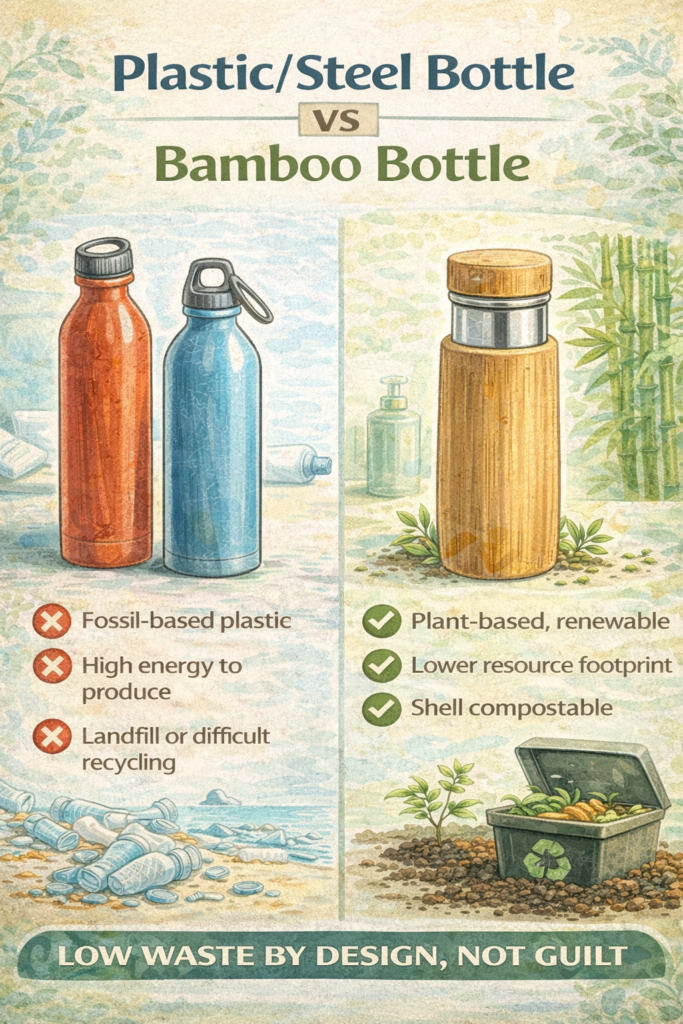
Bamboo water bottles replace plastic and metal bottles with a renewable bamboo exterior. Learn how bamboo bottles are made, their environmental benefits, pros and cons, care tips, and why they are an impactful “reduce-waste-by-design” product.
Why bamboo water bottles matter
We carry a bottle every day—to school, office, gym, travel. That small object represents:
plastic consumption
mining of steel and aluminum
energy-intensive manufacturing
long-distance transport footprints
A bamboo water bottle redesigns the same everyday object using a rapidly renewable natural material, reducing resource use by design, not by after-use guilt or complicated recycling.
Instead of asking people to “recycle better,” it changes the bottle itself.
What is a bamboo water bottle?
A bamboo water bottle typically has:
outer body: made from natural bamboo
inner liner: stainless steel or glass (for hygiene and leakproofing)
lid: bamboo top, often with silicone or steel sealing components
So it is not 100% bamboo—and that is okay. The largest visible and material portion is bamboo, which:
grows quickly
regenerates without replanting
is biodegradable when untreated
stores carbon while growing
The hybrid design gives the best of both worlds:
bamboo’s renewability
steel/glass hygiene, durability and leakproofing
How a bamboo bottle reduces waste by design
Here’s the upstream logic:
replaces full-plastic bottles
reduces demand for virgin stainless steel
lowers embodied energy compared to all-metal bottles
bamboo is renewable, fast-growing, low-input
avoids multilayer plastics and mixed polymers
The biggest win is material substitution:
Switching the primary material from plastic/metal to bamboo
reduces resource extraction before waste is ever created.
Benefits of a bamboo water bottle
1. Renewable and climate-positive material
Bamboo grows:
rapidly (some species grow centimeters per day)
without replanting (rhizome regeneration)
with fewer fertilizers and pesticides than many crops
It also stores carbon while growing—turning atmospheric CO₂ into biomass.
2. Lower plastic use in daily life
Plastic bottles are:
petroleum-based
prone to leaching if exposed to heat
difficult to recycle when multilayered or colored
A bamboo bottle removes large chunks of plastic from the product, leaving only small sealing parts.
For people trying to cut plastic gradually, this is an easy, visible switch.
3. Reduced use of high-energy metals
Steel bottles are durable, but:
steel and aluminum require high-energy mining and smelting
production emits CO₂
mining impacts land and water systems
A bamboo-steel hybrid uses much less metal overall, while preserving hygiene.
4. Insulation & comfort
The bamboo exterior:
acts as a natural insulator
prevents the “too hot / too cold” feel in the hand
reduces condensation sweat on the outside
Warm herbal water and room-temperature drinking water are particularly pleasant in bamboo bottles.
5. Aesthetic and cultural appeal
Bamboo bottles:
feel earthy, natural, handcrafted
reconnect users with nature-based materials
make excellent gifts and corporate sustainability tokens
align with Indian traditions of using natural materials
Design becomes education.
Limitations & honest challenges
Bamboo bottles are great—but not magical. Some limitations in the existing design and hence the opportunity for innovation.
1. Not fully biodegradable
- gaskets, caps, inner liners are not bamboo
steel/glass is recyclable but not compostable
So the bottle is majority bamboo, not “100% bamboo and hence not 100% biodegradable.”
2. Care requirement
Because bamboo is organic, users must:
keep it dry on the outside
avoid soaking in water
avoid dishwashers
Neglected bottles may:
crack
develop mold spots
discolor naturally over time
Good care = long life.
3. Not suited for all liquids
Generally recommended for:
water
herbal drinks
room-temperature liquids
Not recommended for:
acidic juices long-term
dairy left in for hours
very sugary beverages
This is less about bamboo, more about hygiene and smell retention regardless of material.
4. Cost compared to cheap plastic bottles
Bamboo bottles are:
more expensive than throwaway plastic bottles
cheaper than many designer insulated bottles
They sit in a middle band—ideal for conscious users, schools, offices and corporate gifting.
End-of-life: what happens when the bottle is old?
Responsible disposal is simple:
Separate bamboo outer from inner liner
Bamboo shell:
compost
chip
return to soil cautiously (untreated bamboo decomposes naturally)
Steel or glass liner:
send to recycling stream
Compared to full-plastic bottles, this separation is much easier and much more meaningful.
Where bamboo bottles fit in your philosophy
Bamboo bottles fit perfectly into your core message:
Products that reduce waste by design, not by guilt.
They:
redesign material choice
reduce extraction stress
cut plastic before it becomes waste
connect livelihoods (bamboo artisans, SHGs, MSMEs)
support LiFE Mission, Swachh Bharat, SDGs 12 & 13
They are also an excellent entrepreneurial product in:
campus startups
SHG manufacturing & finishing
crafts + utility gift market
corporate sustainability procurement
Final thought
We don’t need to wait for futuristic technology to cut waste.
Sometimes the future is as simple as:
bamboo in our hands
water inside
less plastic everywhere else
The bamboo water bottle is:
practical
beautiful
renewable
a daily climate action you can hold
It reminds us that design choices—not guilt—shape sustainable living.

