
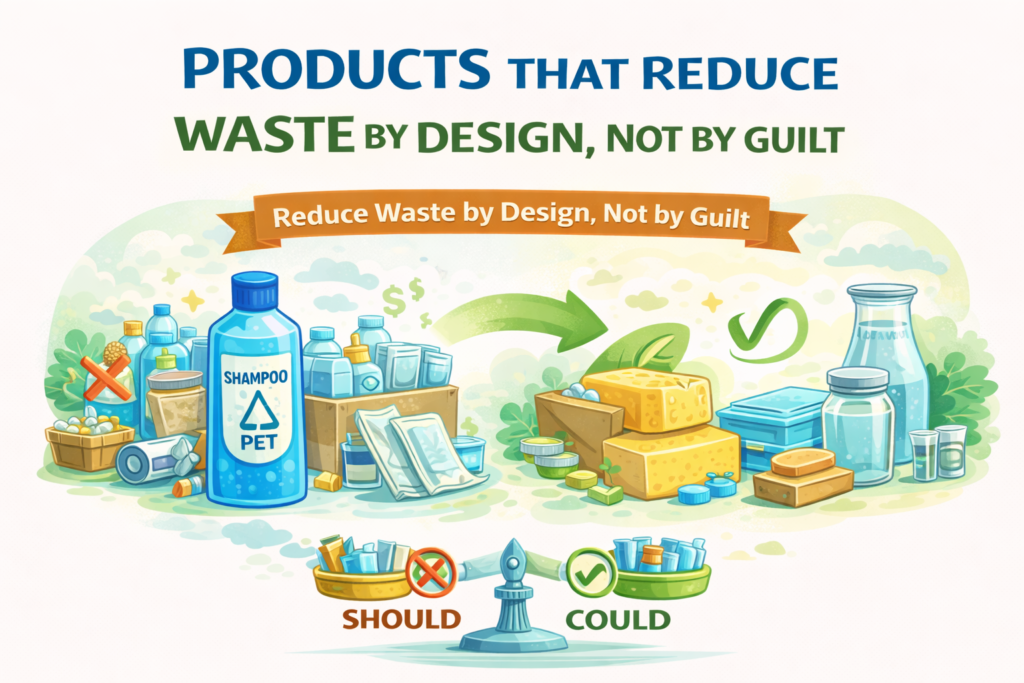
Discover how innovative entrepreneurs are creating products that reduce waste by design instead of blaming consumers. This series explores smart design, waterless products, refill systems, and packaging innovations that prevent waste before it is created.
Introduction: We don’t need more guilt. We need better design
Most conversations around waste sound the same:
carry your own bag
say no to plastic
refuse straws
buy less, consume less, sacrifice more
This puts the responsibility almost entirely on the consumer’s behaviour.
And often, it comes wrapped in guilt.
But here’s the truth no one says loudly enough:
A lot of waste is created long before we get to make a choice.
It is created:
in how products are designed
in materials selected
in formats chosen (liquid vs solid, concentrate vs diluted)
in packaging decisions
in business models that depend on disposability
If waste is designed into a product, no amount of consumer guilt can fully remove it.
The real solution is simpler and smarter:
Build products that reduce waste by design, not by guilt.
What does “reducing waste by design” actually mean?
It means changing the product so that waste never gets created in the first place.
For example:
shampoo bar instead of bottled shampoo
powder-to-liquid refills instead of shipping water
reusable containers instead of sachets
mono-material packaging instead of multi-layer plastic
concentrates instead of bulky ready-to-use liquids
durable goods instead of disposables
When we redesign the product:
packaging reduces automatically
transportation footprint drops
preservatives and chemicals can reduce
refills become natural, not forced
recycling becomes easier or unnecessary
Design becomes prevention.
From downstream fixes to upstream solutions
For decades, we focused almost entirely on end-of-pipe solutions:
beach clean-ups
landfill management
waste segregation drives
recycling campaigns
They are important — but they are all downstream.
This series shifts the lens upstream, to questions like:
Why is this liquid at all? Could it be powder or solid?
Why does this need a plastic bottle?
Why are we transporting water across the country?
Why is this in multi-layer plastic that can’t be recycled?
Can we design this so that waste simply doesn’t exist?
Designing the Future of Everyday Things
This blog marks the beginning of an entrepreneurial series called:
Designing the Future of Everyday Things
Here, we will feature:
entrepreneurs creating waste-preventing products
classic traditions (like uptan or dant manjan) rediscovered
modern design innovations
eco-packaging alternatives
refillable, reusable, waterless and concentrated products
We will also look honestly at:
trade-offs
myths vs realities
where design still needs improvement
Each post will include:
design analysis
material breakdown
lifecycle thinking (extraction → disposal)
real user convenience, not just theory
sustainability rating matrix
This is not about perfection.
It is about better direction.
Why entrepreneurs are at the heart of this movement
Policy is powerful. Awareness is important.
But entrepreneurs turn ideas into things people actually use.
They are the ones who can:
change packaging culture
question “how it has always been done”
bring back traditional wisdom in modern form
invent waterless and concentrated products
normalize reuse and refills
Waste prevention is not only an environmental mission —
it is also a massive business opportunity.
A simple truth to carry forward
The idea behind this series is beautifully simple:
The best waste is the waste that never gets created.
No guilt.
No finger-pointing at consumers.
No endless focus on recycling bins alone.
Just thoughtful design shaping a better future.