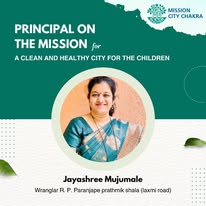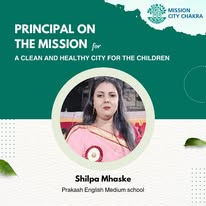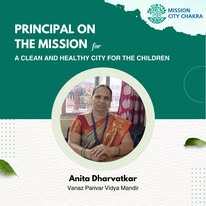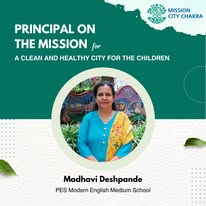

Discover how visionary school principals in Pune are acting as intermediate policymakers—driving plastic-free schools and making Mission City Chakra a city-wide success.
The Environmental Challenge Cities Cannot Solve Alone
Urban environmental challenges—plastic pollution, waste mismanagement, and declining public health—are often addressed through top-down policies or citizen-level appeals.
What is frequently overlooked is the middle layer of influence: institutions and leaders who translate policy intent into everyday practice.
In Pune, one such group is quietly shaping the city’s environmental future: school principals.
Through Mission City Chakra, principals across Pune have demonstrated how leadership within educational institutions can drive meaningful, scalable, and lasting environmental change.
Why Schools Matter in Urban Environmental Transformation
Schools are not just spaces of learning. They are:
daily touchpoints for thousands of families
trusted community institutions
norm-setting environments
gateways between government policy and household behaviour
When a school adopts a sustainability practice, it does more than educate students—it reshapes community norms.
Mission City Chakra recognised this early and positioned schools as strategic nodes for upstream intervention.
Principals as ‘Intermediate Policymakers’
In policy ecosystems, intermediate policymakers are actors who may not draft laws but shape how policies are interpreted, adopted, and sustained.
School principals fall squarely into this category.
They:
approve or block new practices
legitimise behavioural norms
mobilise teachers, students, and parents
translate abstract environmental goals into daily routines
In the context of Mission City Chakra, principals became the bridge between environmental intent and real-world action.
The Mission City Chakra Appeal: Simple, Strategic, Scalable
Mission City Chakra’s appeal to schools focused on clear, actionable shifts:
No plastic tiffin boxes
No plastic water bottles
Non-plastic textbook covers
Family-level commitment through the Mission City Chakra Family Pledge
These were not framed as burdens, but as health-protective, cost-effective, and practical changes.
Principals played a crucial role in:
endorsing the appeal
communicating it to parents
integrating it into school culture
ensuring consistent implementation
Without this leadership, scale would not have been possible.
How Principals Turned an Appeal into Action
Participating principals demonstrated leadership in multiple ways:
1. Institutionalising Plastic-Free Norms
By issuing circulars, holding assemblies, and aligning teachers, principals ensured that plastic-free practices were not optional add-ons but shared expectations.
2. Engaging Parents as Partners
Principals encouraged parent buy-in by framing the shift away from plastic as a child health and safety measure, not merely an environmental initiative.
3. Empowering Children as Messengers
Schools created space for students to take ownership—through pledges, classroom discussions, and peer learning—allowing children to carry the message home.
4. Sustaining the Change
Rather than one-time campaigns, principals helped embed Mission City Chakra values into school routines, making the shift durable and repeatable year after year.
Why Principal Leadership Makes Mission City Chakra Work
Mission City Chakra’s success underscores a critical insight:
Environmental change accelerates when trusted institutional leaders champion it.
Principals bring:
credibility
continuity
authority
and community trust
Their involvement transforms a voluntary appeal into a social norm, reducing resistance and increasing compliance organically.
Recognition: Leaders Who Made It Possible
This page recognises the school principals who:
embraced Mission City Chakra’s vision
implemented plastic-free practices in their schools
inspired students and families
contributed to city-wide waste prevention
Their leadership has impacted not just their campuses, but Pune’s broader environmental trajectory.
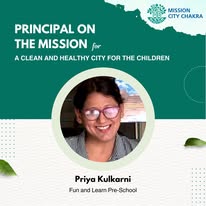
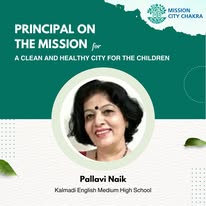
Participating School Principals
Policy change does not always begin in government offices.
Sometimes, it begins in school corridors, morning assemblies, and parent meetings.
By acting as intermediate policymakers, Pune’s school principals are proving that education leadership is environmental leadership.
Mission City Chakra is proud to partner with these leaders as we work toward:
plastic-free childhoods
healthier families
and a more resilient Pune
Building Pune’s Environmental Future—One School at a Time
Hall of Environmental Leadership
Recognising the School Principals Shaping Pune’s Sustainable Future