
Mission City Chakra is mobilising Pune’s schoolchildren to eliminate plastic tiffins, bottles, and textbook covers—protecting health, preventing microplastic pollution, and triggering family-level behaviour change.
A Quiet Shift Is Happening in Pune’s Homes and Schools
Across Pune, a silent but powerful transformation is underway.
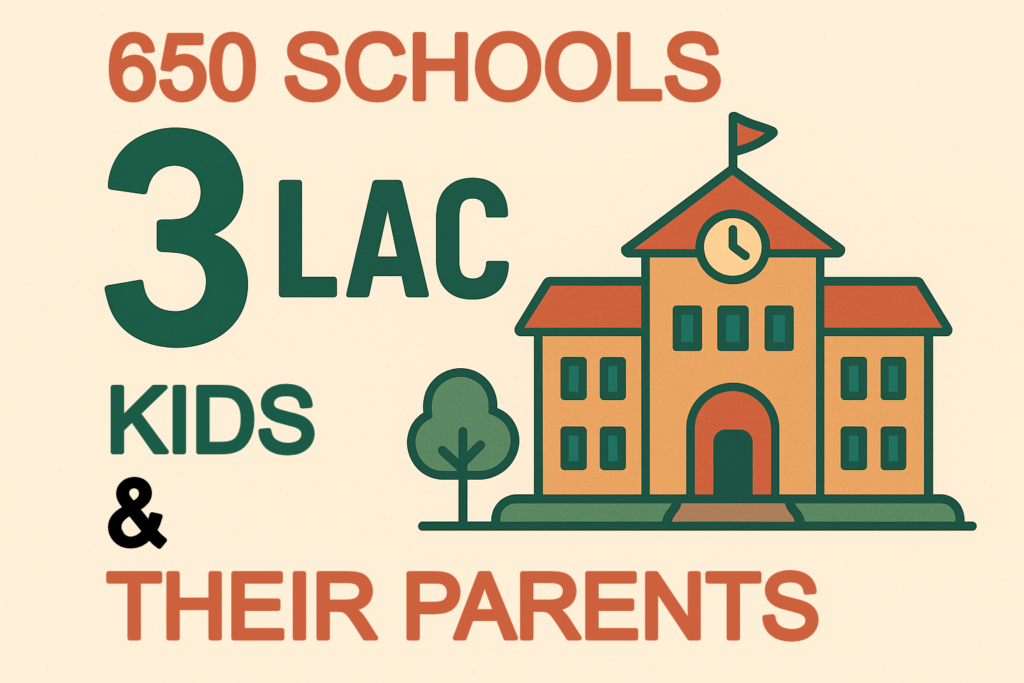
More than 3 lakh schoolchildren are participating in a simple yet far-reaching shift:
moving away from plastic tiffin boxes, plastic water bottles, and plastic textbook covers.
There are no loud rallies.
No enforcement drives.
No penalties.
Just children making everyday choices—and carrying those choices back home.
This is the heart of Mission City Chakra: an upstream, preventive intervention that starts with children and reshapes household behaviour, health outcomes, and the city’s waste future.
Why Mission City Chakra Began with Children
Children are not just future citizens.
They are present-day influencers.
When a child understands why plastic is harmful and what a better alternative looks like, they do something remarkable:
They insist on steel tiffins
They refuse plastic water bottles
They question plastic textbook covers
They remind parents—again and again
Behaviour change becomes effortless when it is child-led.
Mission City Chakra deliberately chose schools as the starting point because habits formed early last longest—and spread fastest.
The Core Appeal: No Plastic in Everyday School Essentials
Mission City Chakra’s school outreach focuses on three highly visible, daily-use items:
1. No Plastic Tiffin Boxes
Plastic tiffins expose children to chemicals through heat, wear, and food contact. Over time, they crack, discolour, and shed microplastics.
A steel tiffin, on the other hand:
lasts for decades
does not leach chemicals
is fully recyclable
requires replacement only once, not every few years
2. No Plastic Water Bottles
Plastic bottles are often reused far beyond their safe lifespan, increasing health risks.
Steel bottles:
are safer for drinking water
withstand years of use
reduce repeated plastic consumption
3. Non-Plastic Textbook Covers
Plastic book covers tear quickly and are discarded annually.
Paper or cloth alternatives:
are reusable or recyclable
prevent tonnes of avoidable plastic waste each academic year
Individually, these may seem like small changes.
Collectively, they add up to massive plastic avoidance at source.
From School to Home: How Children Change Families
What makes this initiative powerful is not just what happens in school—but what happens after.
Children take the message home.
They ask questions.
They make requests.
They persuade.
To strengthen this ripple effect, Mission City Chakra introduced the Family Pledge.
The Mission City Chakra Family Pledge
The Family Pledge invites children and parents together to commit to a specific, time-bound action:
“On a decided date, our family will shift from plastic tiffins to steel tiffins.”
This date matters.
It turns intention into commitment.
Commitment into action.
Action into a long-term habit.
Importantly, the pledge is framed not as an environmental sacrifice, but as a family decision for health, safety, and wellbeing.
An Upstream Intervention with Long-Term Impact
Most waste systems deal with plastic after it becomes waste.
Mission City Chakra works upstream—before plastic enters children’s lives at all.
This has multiple benefits:
Prevents direct exposure to plastic in food and water
Reduces microplastic generation from worn-out containers
Cuts downstream waste management burden
Avoids invisible health impacts linked to plastic contact
By eliminating plastic at the point of use, the intervention protects both human health and environmental health simultaneously.
Why Steel Makes Economic and Environmental Sense
Plastic tiffins typically need replacement every 1–2 years due to cracking, odour retention, and wear.
Steel tiffins:
last for decades—often a lifetime
require fewer raw materials over time
save manufacturing energy
reduce repeated consumption and disposal
What appears cheaper upfront often costs more in the long run—financially, environmentally, and in health terms.
Steel is not just sustainable.
It is economically rational.
Preventing Microplastic Pollution—Before It Begins
Every discarded plastic tiffin does not disappear.
It degrades into microplastics, entering:
soil
water bodies
food chains
human bodies
By replacing plastic tiffins and bottles with steel, Mission City Chakra stops microplastic pollution before it starts—a critical but often overlooked benefit.
This is preventive public health action disguised as a school campaign.
This Is Just the Beginning
The shift away from plastic tiffins, bottles, and textbook covers is only the first step.
Mission City Chakra sees this as the foundation of a larger culture change—where children grow up:
waste-literate
health-conscious
environmentally responsible
confident in influencing adults
Today’s steel tiffin is tomorrow’s plastic-free household, composting family, and climate-aware citizen.
A Quiet Movement with a Powerful Future
Three lakh children may not be making headlines.
But every steel tiffin packed for school,
every plastic bottle left behind,
every family pledge honoured—
is reshaping Pune’s waste future from the inside out.
Mission City Chakra believes that lasting urban change doesn’t start in landfills or laws—it starts in lunchboxes.